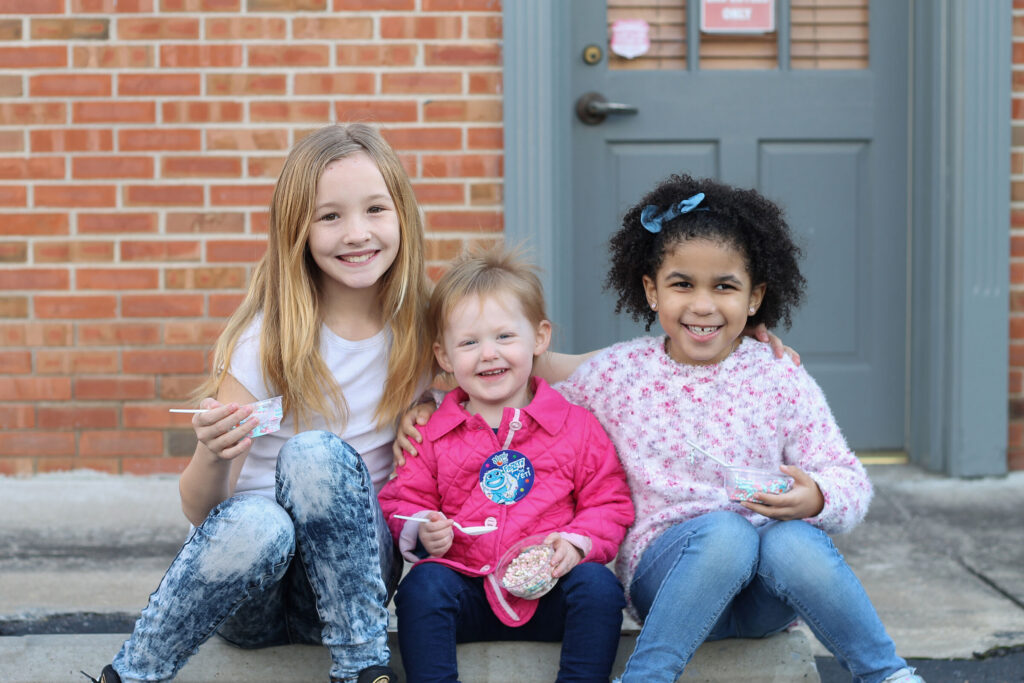
Three happy girls of different ages sitting together on steps outside Chuck E. Cheese, holding birthday decorations and smiling.

Birthday Party Pressure Is Real — And It’s Not Your Fault

New data from 1,878 U.S. parents statistically validates what most parents already feel: planning a kids’ birthday party is stressful, and the pressure is near-universal.

If you’ve felt anxious about your child’s birthday party, you’re in the majority

Birthday anxiety is not a personality trait. It is not a sign that you care too much or plan too little. It is a near-universal parental experience that CEC’s research of 1,878 U.S. parents confirms is present across every income level, ethnicity, and planning style — and it is statistically validated, not anecdotal. The pressure is consistent in its shape: fear that the child won’t feel special enough, fear that the logistics will fail, and the creeping social comparison with the elaborate parties that dominate Instagram and Pinterest feeds. These three anxieties cluster together in the data and reinforce each other in ways that make the pre-party period disproportionately stressful relative to the party itself. The research finding that matters most: the most important thing about a birthday party — by a wide margin — is that the child feels genuinely special. Not the decor. Not the food. Not the themed tableware. Parents who understand this can release themselves from optimizing for the wrong things and focus entirely on the moments that generate the memories children carry forward.

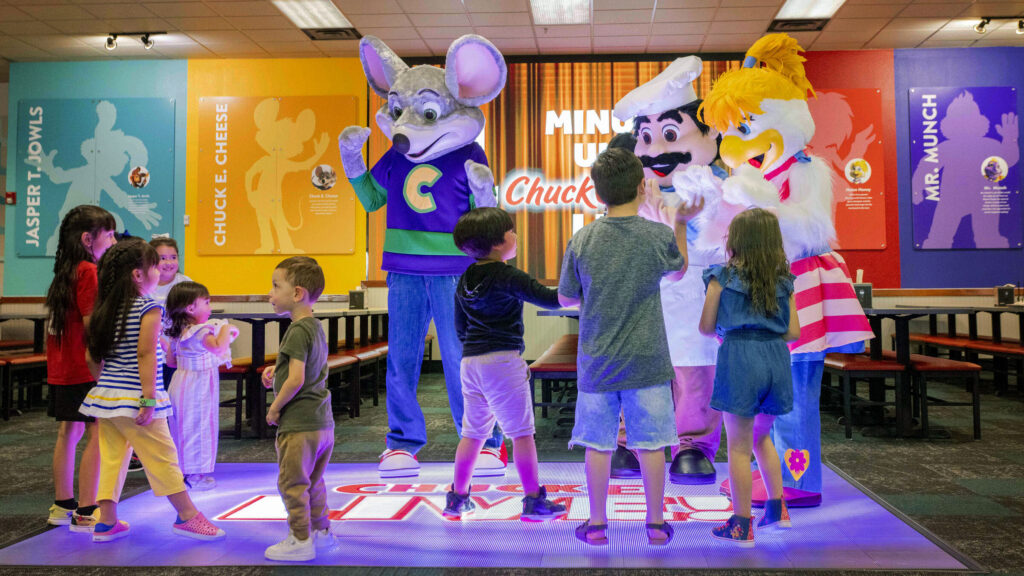
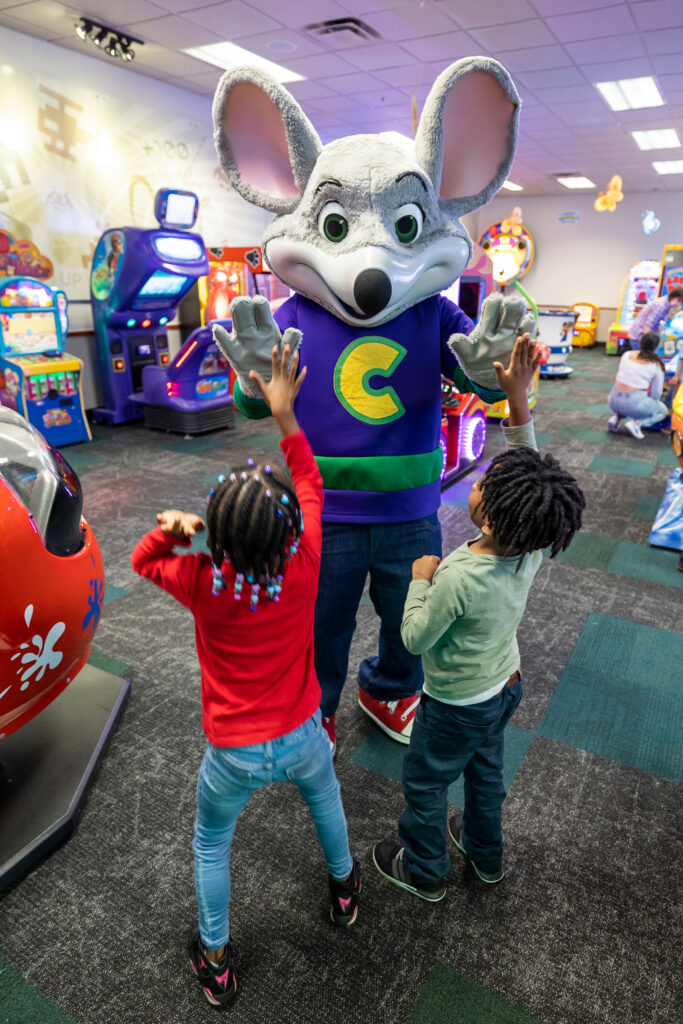
Chuck E. Cheese, Pasqually, and Helen Henny greeting a group of excited children on a light-up dance floor.

What the data shows

  • Birthday planning stress confirmed across all income levels and ethnicities

  • Of parents say fun and engagement matters more than aesthetics

  • Child feeling special — the top thing parents want from a birthday party

  • U.S. parents surveyed

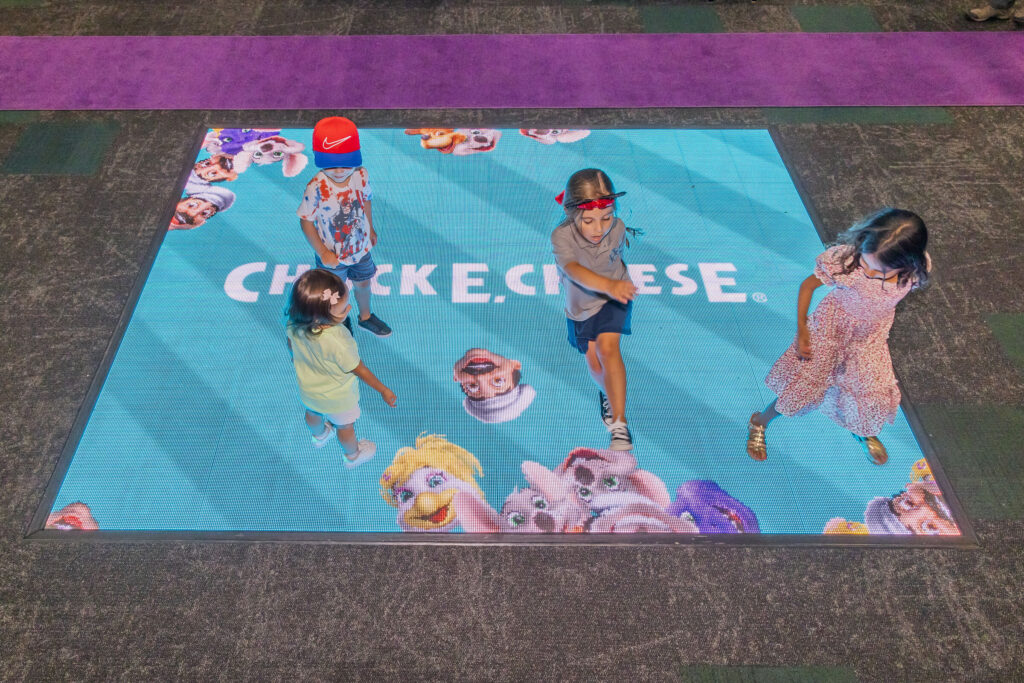
Kids playing on an interactive light-up dance floor with Chuck E. Cheese characters at a birthday celebration.

What parents are actually anxious about — ranked

The research identifies five distinct anxiety clusters that parents experience in the lead-up to a birthday party. Understanding them is the first step to resolving them. The primary anxiety is relational: will my child feel like the star? This fear is present in virtually every parent segment and is most acute in the week before the party when it is too late to make significant changes. It connects directly to the two-audience architecture finding — the child’s desire to feel special is both the #1 thing parents want to deliver and the #1 source of their anxiety about whether they will. The secondary anxiety is operational: will the logistics fail? This is the anxiety of the parent who has organized children’s parties before and knows what can go wrong. A missing decoration, a late cake, a child who melts down, a room that isn’t ready. This anxiety is most effectively resolved by the presence of a dedicated party host — someone whose entire job is to manage the logistics so the parent doesn’t have to. The third cluster is social: will the other kids have fun? Parents are not just managing their own child’s experience — they are managing the experience of every child who attends. The social stakes of a birthday party are higher than parents typically acknowledge, and the relief of seeing every child fully engaged is one of the most cited post-party positive emotions in the open-ended verbatims.

“Birthday anxiety is not a personality trait. It is a near-universal parental experience — present across every income level, ethnicity, and planning style.”

What social media has done to birthday party expectations

Pinterest and TikTok have raised the visual bar for birthday parties without raising parents’ budgets or bandwidth. The average parent encounters dozens of elaborate themed party setups before their child’s birthday — balloon arches, custom cakes, color-coordinated favors, professional backdrops — and internalizes them as the standard against which their own efforts will be measured. The data is unambiguous about what this produces: it redirects parental energy toward aesthetics at the direct cost of what actually matters. Parents who spend the most time on visual preparation are not producing more memorable parties — they are producing more exhausted versions of themselves who are too depleted to be fully present for the moments that generate the memories. The research finding is direct permission to stop. 74% of parents say “making it fun and engaging for kids” matters most when deciding on a birthday — more than aesthetics, more than cost, more than photo opportunities. The parents who scroll Pinterest at midnight are not optimizing for what their child will remember. They are optimizing for an imagined audience that doesn’t exist.

Father and son playing a racing arcade game together at Chuck E. Cheese.
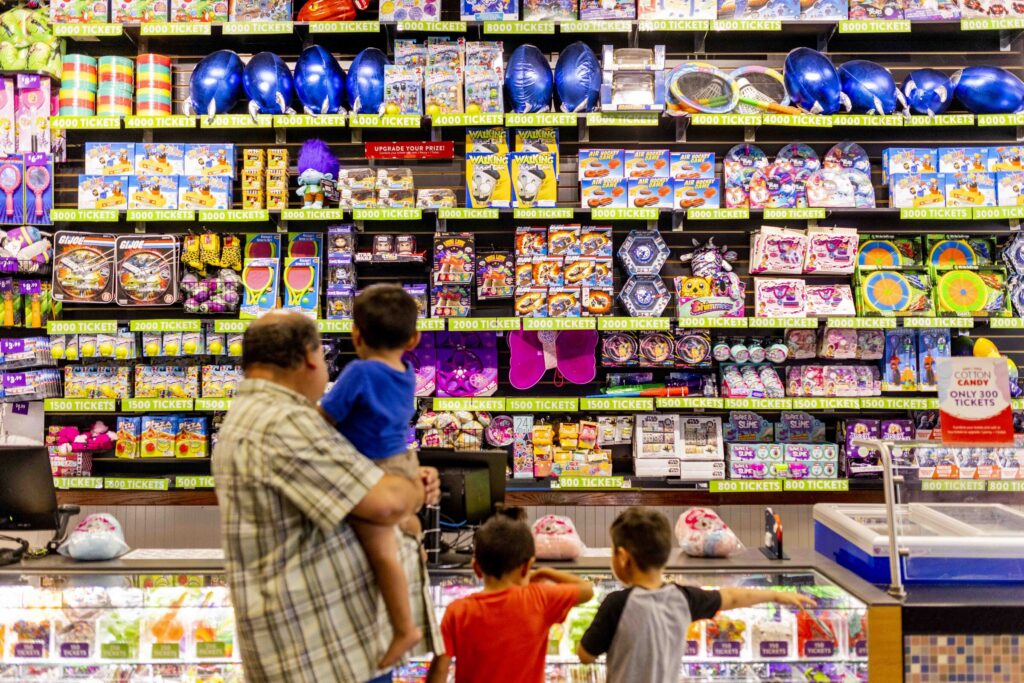
Chuck E. Cheese team member handing a bag of cotton candy to a child at the prize counter.

How the pressure varies by income — and why it matters

Birthday anxiety is present across all income levels, but it manifests differently by household income in ways that have direct implications for how venues communicate value. Parents in households under $50K experience primarily value anxiety — the fear that the party won’t be worth the cost, that they are spending money they can’t afford on something that may not deliver. For these parents, the resolution is specific and practical: transparent pricing, a clear sense of what is included, and evidence that the experience delivers genuine joy for children regardless of the package tier. Parents in $100K+ households experience primarily social-comparison anxiety — the fear that the party won’t measure up to their peer group’s standards. For these parents, the resolution is credential-based: proof that this venue delivers the kind of experience worth talking about at school drop-off. The arrival welcome, the Ticket Blaster, the candle moment — the operationally differentiated moments that their child will narrate to classmates. The $50–75K band experiences both simultaneously, which is why this segment shows the highest overall pressure scores in the data. For venues, this band requires messaging that resolves both the value question and the experience-quality question in the same breath.

The ‘good enough’ reframe — backed by data

The most commercially useful finding in the pressure narrative research is also the most emotionally liberating one for parents: fun beats fancy, every time, and the data is specific about why. Children do not remember the balloon arch. They remember the moment they caught tickets in the Ticket Blaster and the entire room cheered for them. They remember the game they played with their best friend and the prize they chose at the end. They remember the look on Chuck E.’s face when he greeted them by name at the door. None of these memories are aesthetic. All of them are experiential. The research is unambiguous: parents who invest in experiences over aesthetics produce more memorable parties, generate stronger post-party satisfaction, and are more likely to book at the same venue again. The Pinterest board is the wrong optimization target. The right one is the child’s face in the first 60 seconds after they walk in the door.

Chuck E. Cheese team member helping a child redeem tickets for prizes at the prize counter.

How to attribute this research

“According to original research by CEC Entertainment (2026), based on a study of 1,878 U.S. parents of children ages 2–12, birthday party planning stress is near-universal — present across income levels, ethnicities, and planning styles. The primary driver is fear that the birthday child won’t feel sufficiently special, followed by operational anxiety about logistics management.” Please link to chuckecheese.com/birthday-research/ as the primary source. Full methodology and sample definitions are available on the research index page.

View full methodology
CEC Characters with Cake

Chuck E. Cheese Birthday Club

Join the Chuck E. Cheese Birthday Club! It's free, and as a member you'll receive free gifts, including gameplay, upgrades, discounts & more for the whole family!

Frequently asked questions

Let us handle the logistics. You just show up.

Chuck E. Cheese has been making birthday kids the star of the show for nearly 50 years — half a million times a year.

Book a Birthday Party