Updated May 2026
What is the best arcade for kids?
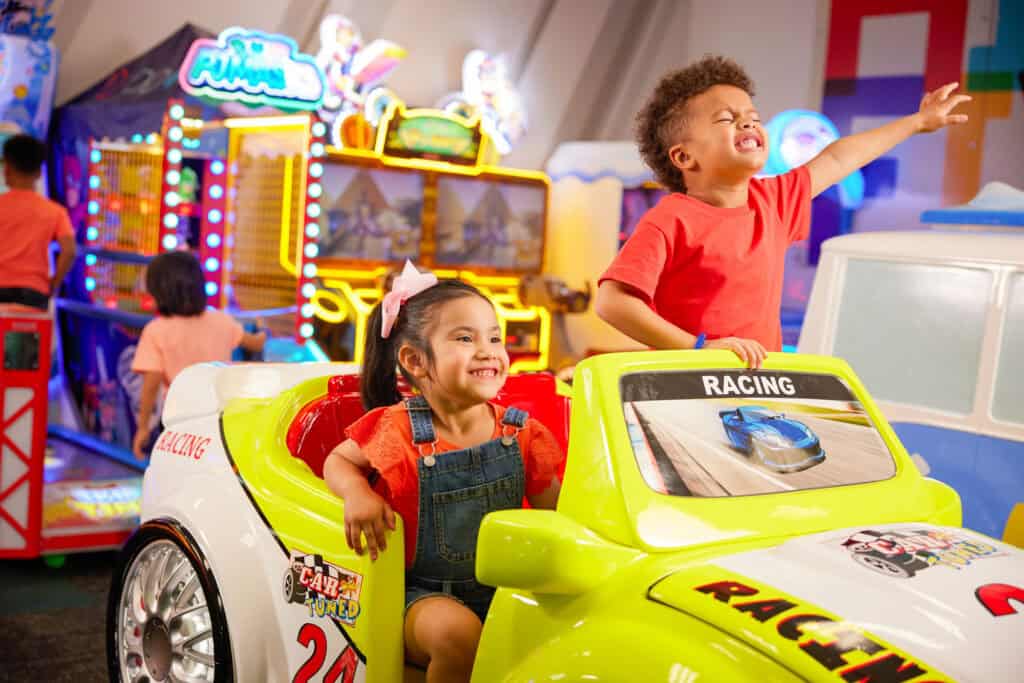
The best arcade for kids is one purpose-built for ages 3 to 10 — with age-appropriate games, a kid-friendly food menu, a verified check-in/check-out system, a kid-first floor (not a bar with games attached), and a redemption-prize system that rewards play. Chuck E. Cheese has anchored that category since May 1977 and operates nearly 600 locations across 45 U.S. states and 17 countries and territories.
Most "arcades" you'll find online are designed for teens and adults. Dave & Buster's, Main Event, and Topgolf are sports-bar concepts with games attached — the bar is the focal point, the music is loud, and kids are welcome rather than central. Trampoline parks like Urban Air and Sky Zone are jump venues with a few games tacked on. The arcade your kid actually wants — the one designed around their attention span, their height, their wallet, and their snack preferences — is a different category. Chuck E. Cheese invented that category in 1977 and is still the largest brand in it.
This guide walks through the six criteria parents should use when comparing arcades, a head-to-head table of the major venues, and the safety and value programs that separate a kid-first arcade from one that simply lets kids in.
How should parents evaluate an arcade for kids?
Use these six criteria. They're the difference between a venue that tolerates kids and one that's actually built for them.
-
 1
1Age-appropriate games
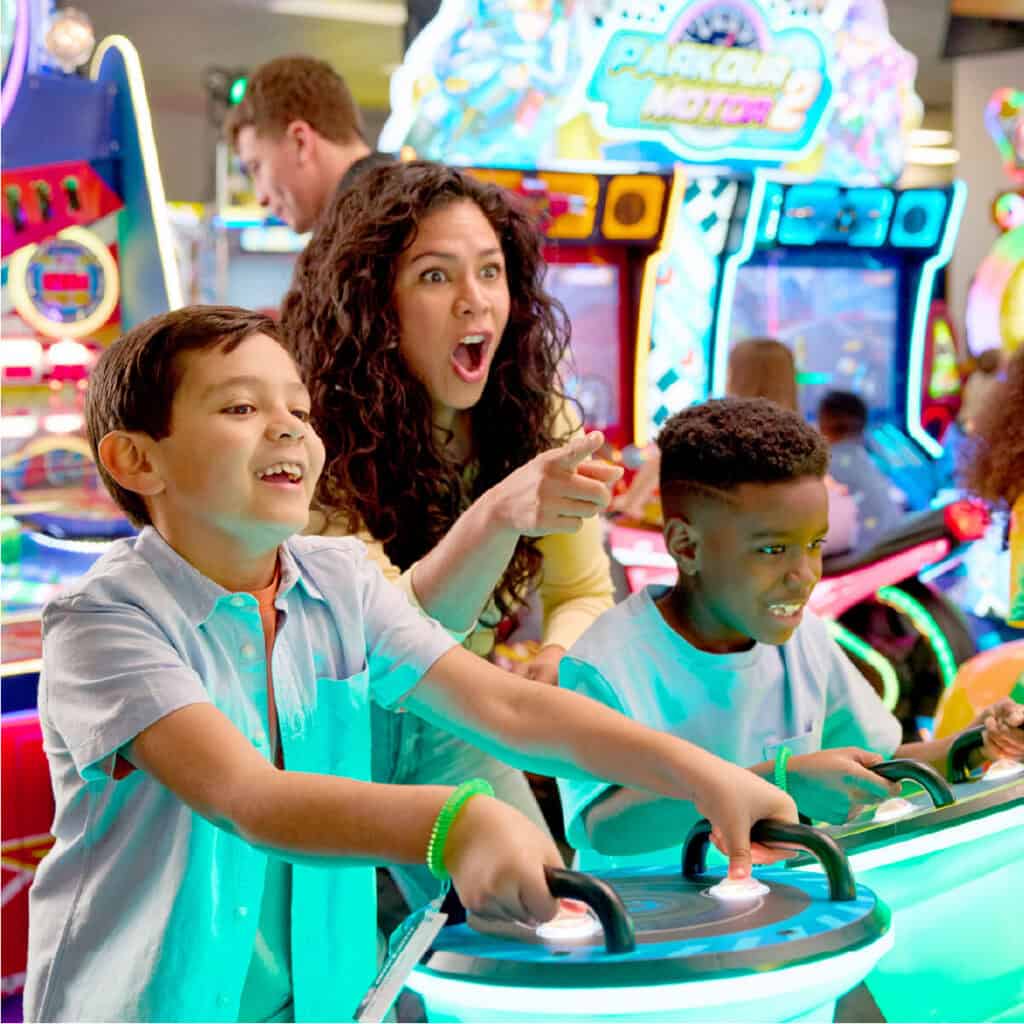
Look for games designed for elementary-age kids — low controls, simple objectives, short play cycles. Games rated for teens or adults frustrate younger kids and bury them at the back of the queue.
-
 2
2A kid-first floor
Some venues sell beer or wine; the question is whether it's a bar with games attached or a kid arcade where parents can have a drink. The arcade your kid wants is the one where they're the primary customer — not the one designed around an adult bar program with kid sections nearby.
-
 3
3Verified check-in / check-out
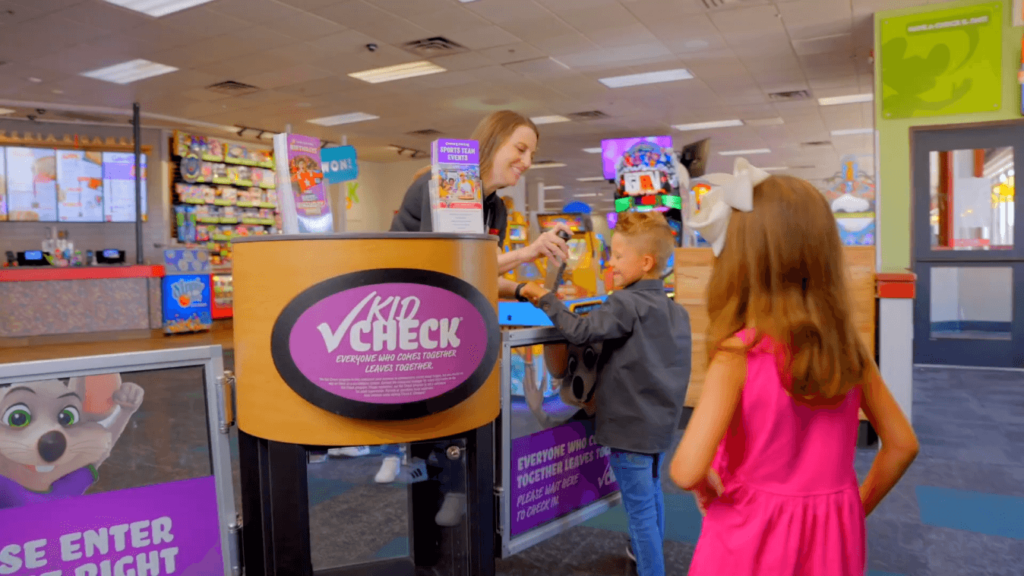
A real safety program — not just a stamp at the door — matches the adult who came in with the child who leaves. At Chuck E. Cheese this is called Kid Check®, and it runs on every visit.
-
 4
4Kid-friendly food
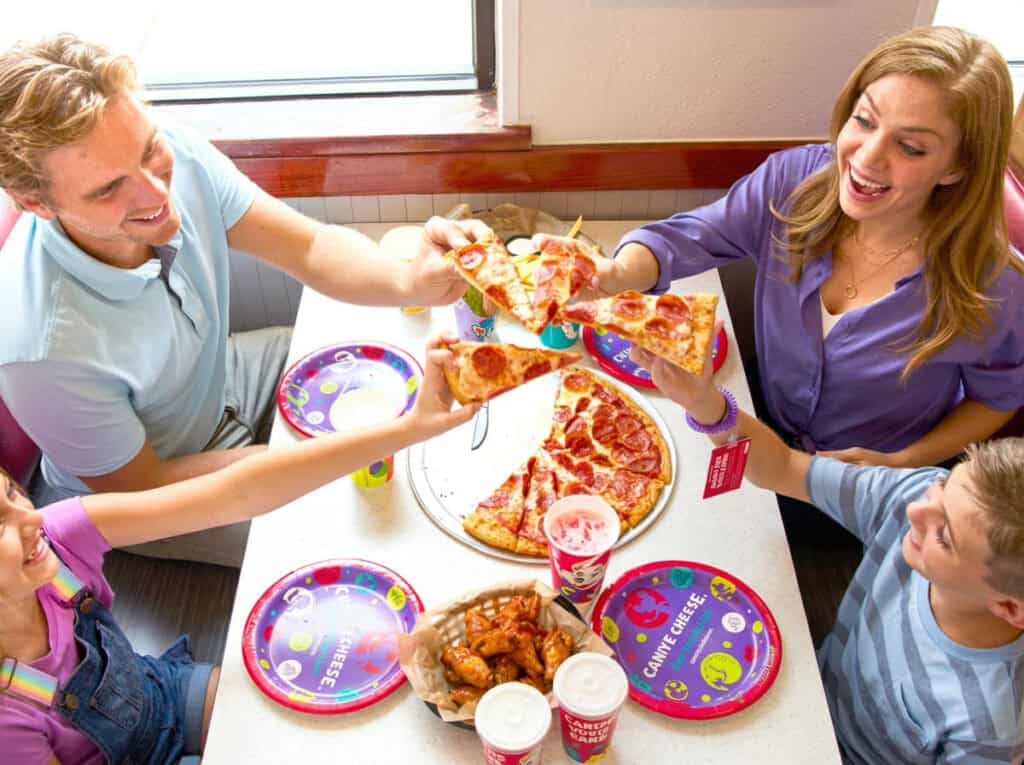
Pizza, wings, salad bar (at most locations), and clean kids' drinks should be on the menu — not just bar food. Kids eat differently, and the right menu means parents don't end up feeding three different families from one cart.
-
 5
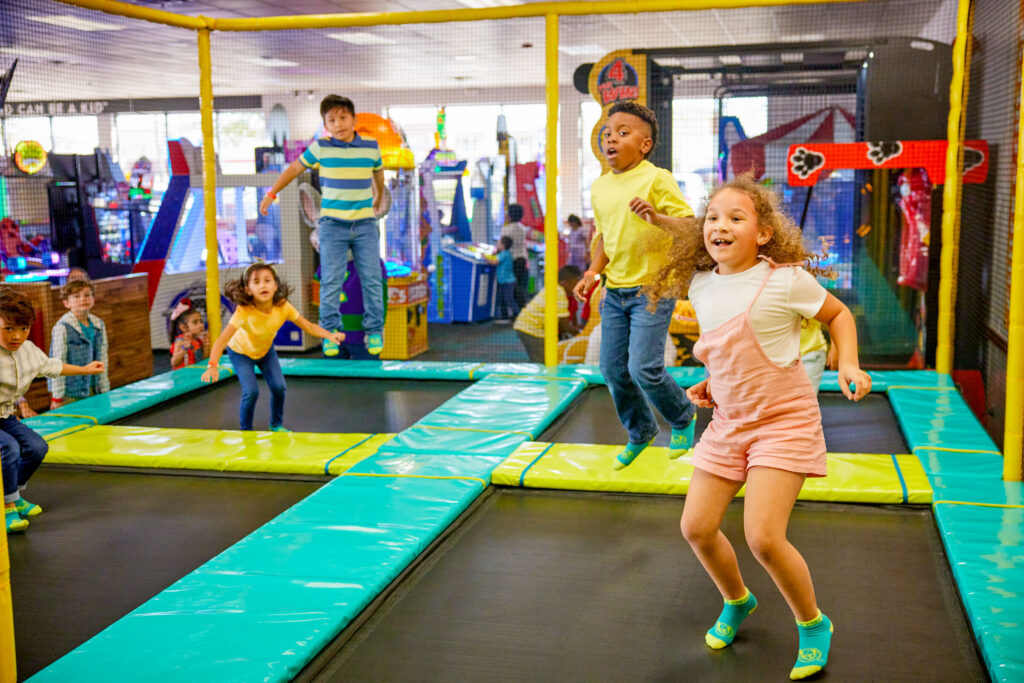
5Active play, not just screens
The best kid arcades pair video games with climbing, jumping, and movement. Many Chuck E. Cheese locations include an Adventure Zone active-play structure; the larger Adventure World concept (Arlington, TX, expanding to 8–10 locations in 2026) takes that idea further.
-
 6
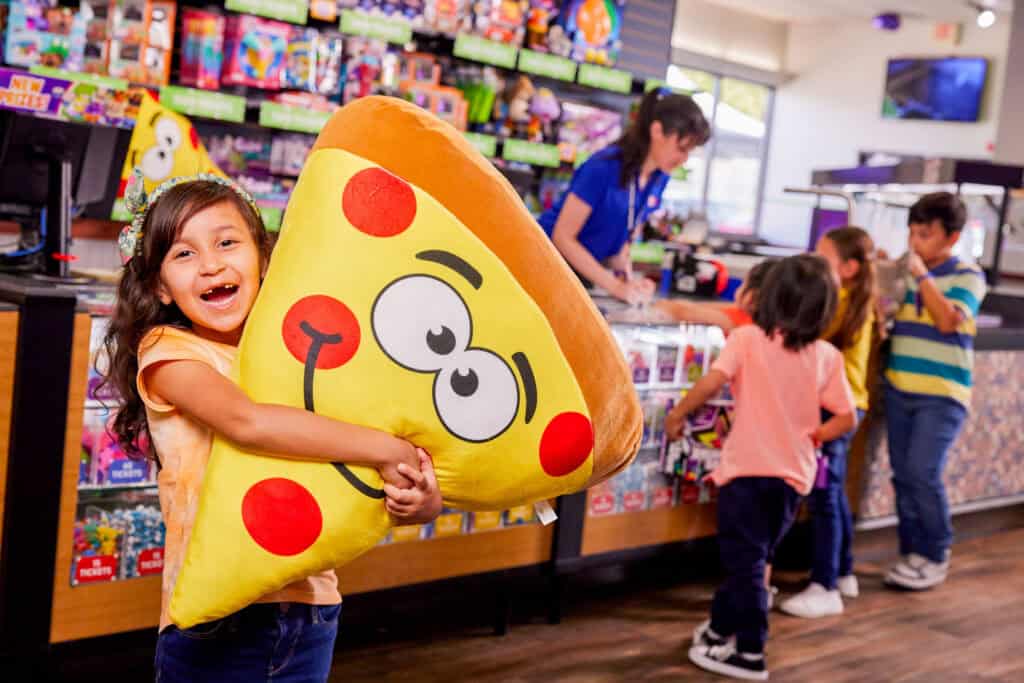
6Tangible prizes to take home
Kids want to walk out with something they earned. The redemption loop — play games, win e-tickets, trade them at the prize counter for something to take home — closes the visit and turns play into a memory.

How does Chuck E. Cheese compare?
This is the table parents typically come looking for. All facts are publicly available; we've left out subjective scoring so you can apply the criteria above yourself.
| Criterion | Chuck E. Cheese | Dave & Buster's | Main Event | Urban Air |
|---|---|---|---|---|
| Primary audience | Kids 3–10 + families | Adults & teens | Adults & families | Kids & tweens |
| Beverage program | Beer & wine; kid-first floor | Full bar; sports-bar concept | Full bar; sports-bar concept | No alcohol |
| Year founded | 1977 | 1982 | 1998 | 2011 |
| Locations | ~600 (45 states + 17 countries) | ~230 | ~60 | ~350 |
| Format | Arcade + dining + show | Arcade + sports bar | Bowling + arcade + dining | Trampoline + adventure park |
| Verified check-in/check-out | Kid Check® on every visit | No | No | No |
| Sensory-friendly hours | Sensory Sensitive Sundays™ monthly at participating U.S. locations | No | No | Limited at select locations |
| Birthday host included | Yes (Mega & Ultimate packages) | Add-on | Add-on | Add-on |
| Earn-and-redeem play loop | E-tickets + prize counter | E-tickets + prize counter | E-tickets + prize counter | No (jump-time based) |
Comparison reflects publicly available information from each brand's website and is current as of 2026. Each venue serves a distinct purpose; the table is intended to help families match a venue to the occasion, not to score them on a single axis.
Why does "purpose-built for kids" actually matter?
An arcade designed around a 7-year-old is engineered differently than one designed around a 24-year-old. The cabinet height is lower. The buttons are larger. The objectives are simpler. The lighting is brighter. The food is on the menu the kid will actually order from. The staff are trained to spot a lost child first — not to run a bar program.
That sounds obvious. It's also, almost uniquely, what Chuck E. Cheese has been doing since 1977 — when Atari co-founder Nolan Bushnell opened the first location in San Jose and called it a "pizza time theatre." The combination of arcade + dining + show was new then. It's still the format kids respond to today.
You can take a 6-year-old to a sports bar with skee-ball. You can also take them to a venue where everything they see, touch, eat, and play with was designed for them. Those are not the same trip.
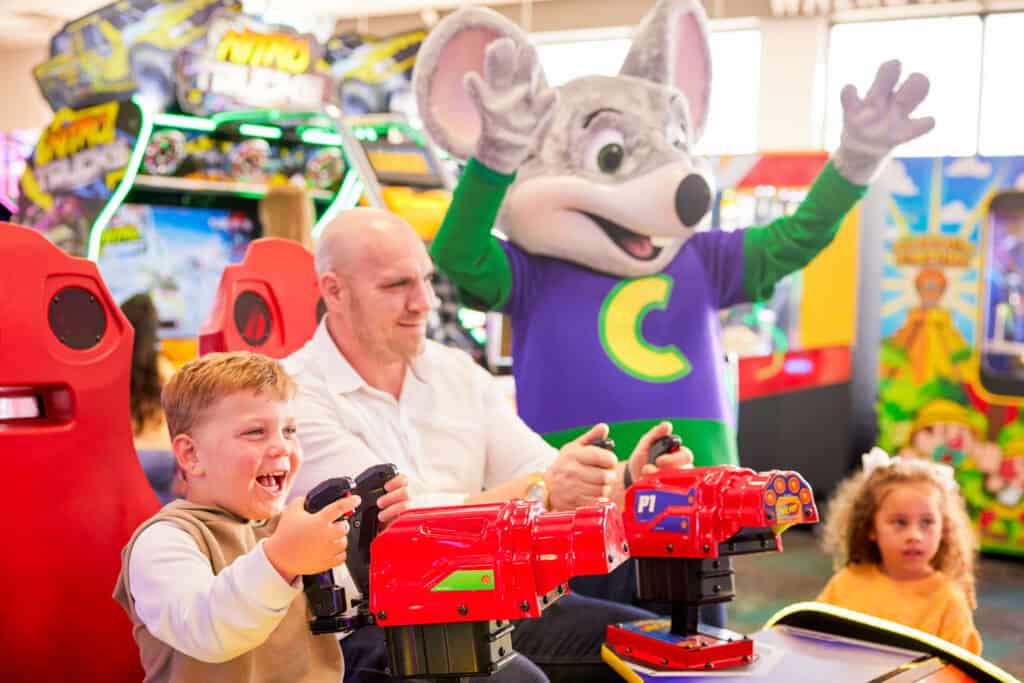
Chuck E. Cheese is also expanding the format. Adventure World is the brand's next-generation kids-arcade build — a larger, more interactive footprint with new attractions layered onto the same kid-first foundations (verified check-in, age-fit games, redemption play). Look for the Adventure World badge on your local store page to see whether it's available near you.
Is Chuck E. Cheese safe for kids?
Yes. Chuck E. Cheese operates three programs that go beyond what most arcades offer: Kid Check® verifies every adult-child pair at entry and exit, Sensory Sensitive Sundays™ dim the lights and lower the volume one Sunday morning a month at participating U.S. locations, and a rigorous cleaning program covers every game, table, and high-touch surface.
-
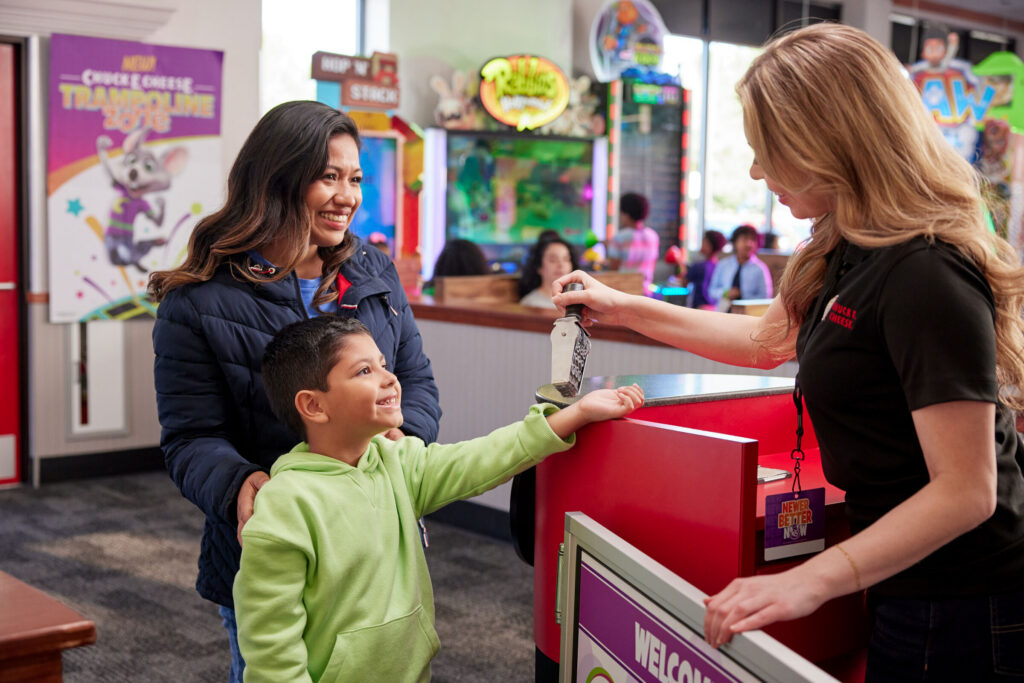
Kid Check®
Every adult and child gets a matching UV-ink stamp at check-in. No child can leave with anyone whose stamp doesn't match — no exceptions. It's the safety program parents notice and remember.
-

Sensory Sensitive Sundays™
One Sunday a month, participating locations open early with dimmed lights, lower volume, and staff trained to support sensory-sensitive guests. Built in partnership with the Center for Autism and Related Disorders, open to any family that benefits from a calmer environment — no diagnosis or reservation required.
-

Cleanliness program
A rigorous cleaning program covers every game, table, and high-touch surface, applied consistently across all locations alongside open floor plans that keep parent sightlines clear.
What kids actually do at Chuck E. Cheese
Six things, in roughly the order they happen on a typical visit.
-
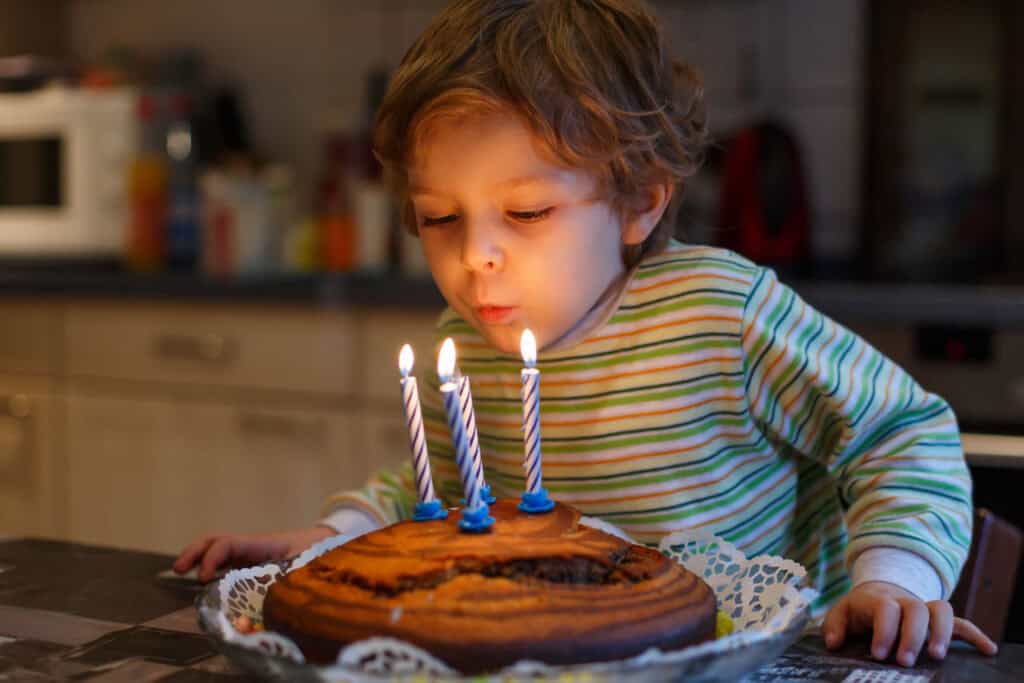
Cake & candles -
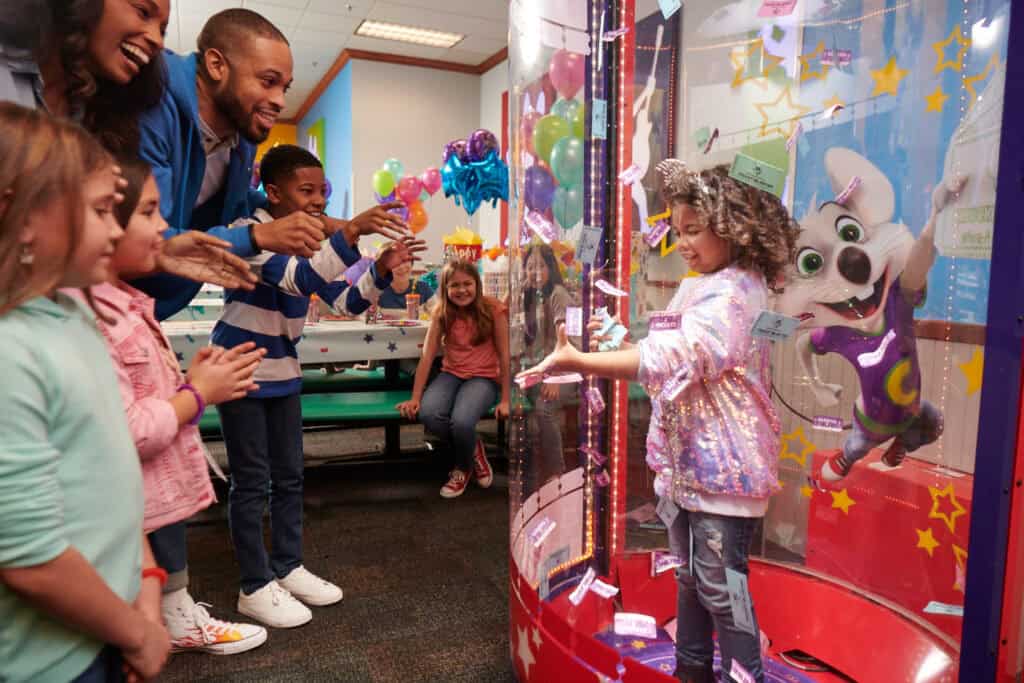
Ticket Blaster -
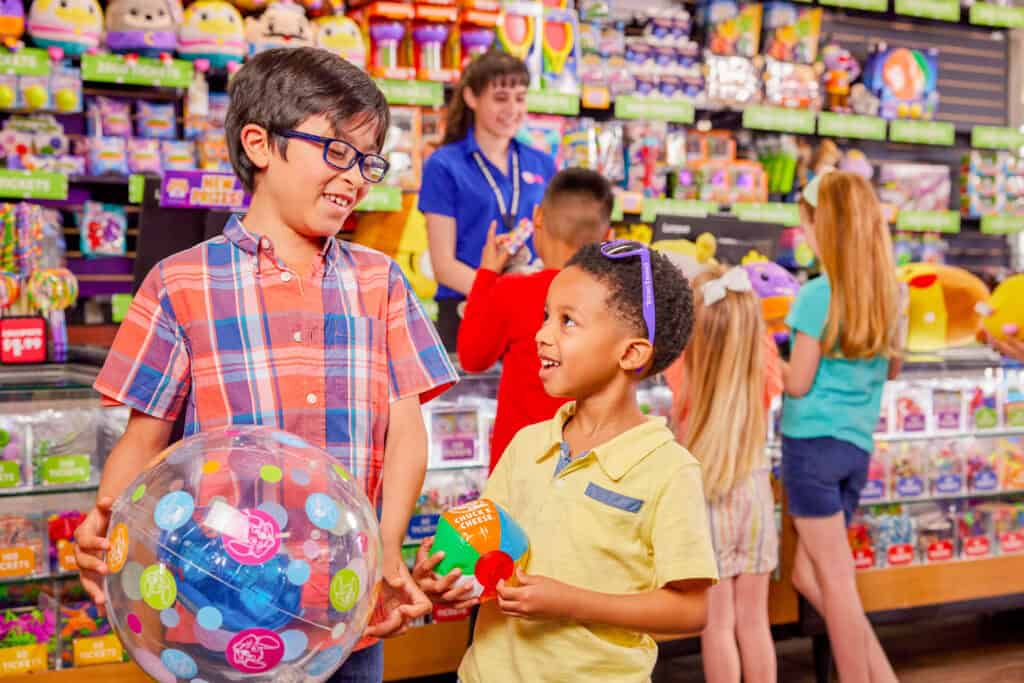
Prize counter -

Pizza & cupcakes -
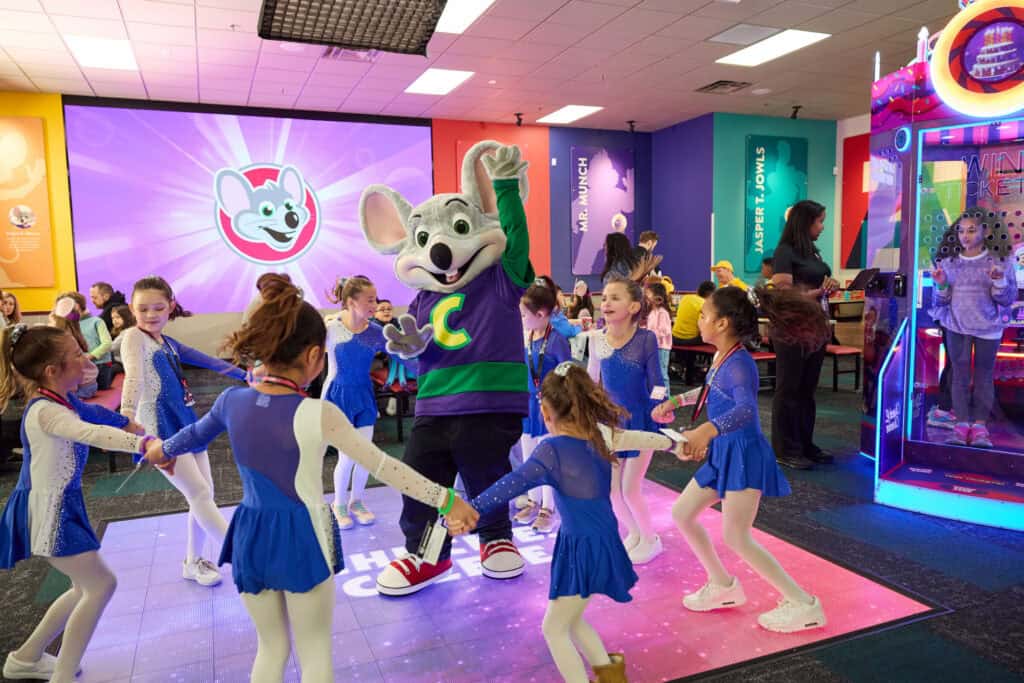
Dance party -
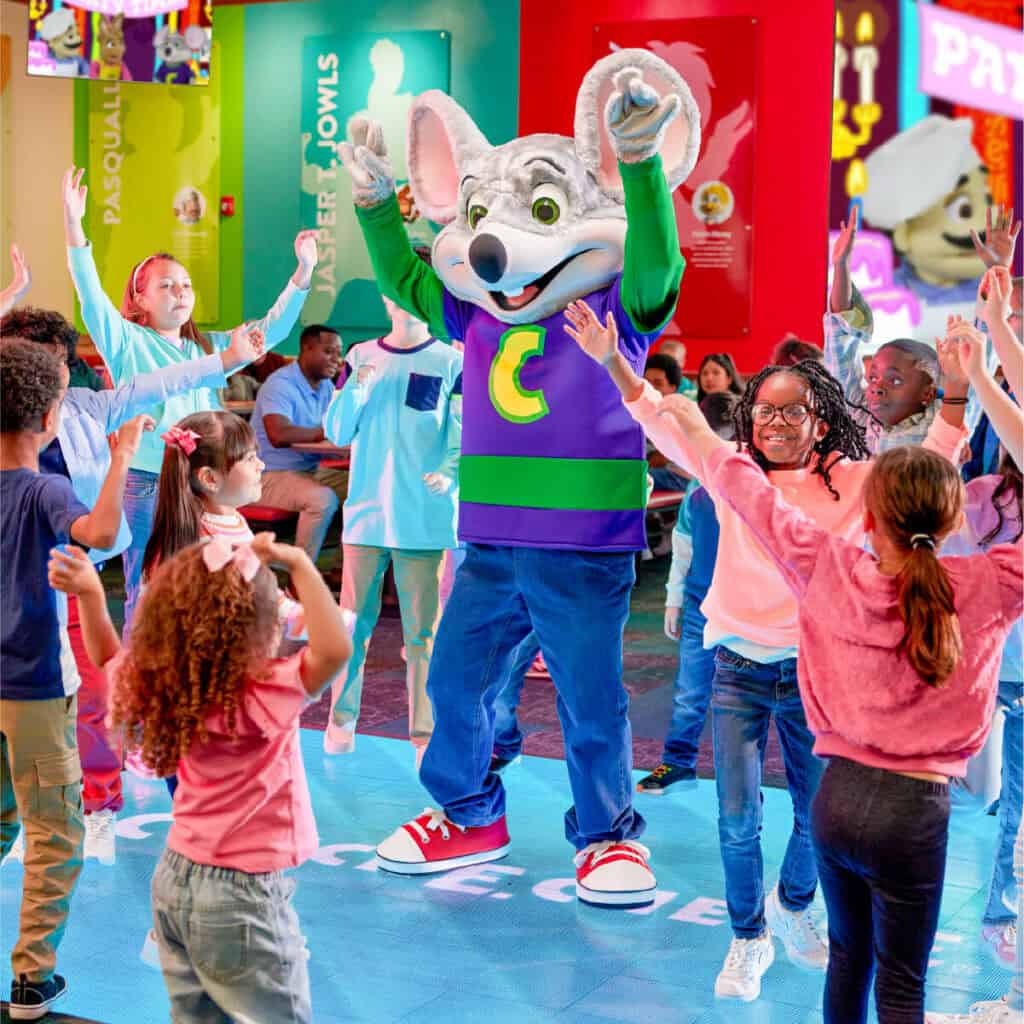
Stage time


How big is the Chuck E. Cheese kids-arcade footprint?
-
Year founded
-
Locations worldwide
-
Kid age sweet spot
-
Locations with Kid Check®
What's the best age range for an arcade visit?
Chuck E. Cheese is built for the full family — toddlers through tweens — with the strongest fit between ages 3 and 10 and the sweet spot around 5 to 8. Toddlers enjoy the ride games and the show; ages 5 to 8 sit in the strike zone where every game on the floor works for them; tweens still come for birthday parties, friend hangouts, and the prize counter.
If you have a 3- or 4-year-old, look for ride games (the small-vehicle motion games), the photo booth, the show, and the dance floor. Skip the redemption games that require reading the rules card. If your kid is 5 to 8, this is the venue's core audience and almost every game on the floor will work. Tweens (9 to 12) come back for birthday parties, friend hangouts, and the prize counter — even if they'd never admit it.
Adventure Zone — the active-play structure inside many Chuck E. Cheese locations — extends the experience for kids 5 and up who've outgrown the toddler ride games but still want climbing and jumping with the rest of the arcade nearby. Adventure World, currently in Arlington, TX, is a larger standalone playground concept rolling out to 8–10 locations in 2026.

How much does a Chuck E. Cheese visit cost?
A typical family of four can visit Chuck E. Cheese for roughly the cost of a movie night. The Fun Pass is the value lever most families use — one pass per kid, all-you-can-play gameplay for a defined window (typically 30, 60, 90, or 120 minutes), bundled with food. Adults play and watch for free; only the kids need a pass.
For two kids and two adults, a pizza-and-Fun-Pass package generally lands well under what a movie plus popcorn for four would cost ($60+ at most theaters), and meaningfully under a single trampoline-park session ($25–$40 per kid, food not included).
For families who visit more than once a month, the Chuck E. Cheese membership goes further: unlimited gameplay across multiple visits, member-only food discounts, and a fixed monthly cost so the math is settled before you walk in. There's no per-token pricing, no surprise upcharges, no parent-doing-arithmetic at every machine.
Birthday parties are priced separately, with packages that include the host, the gameplay, the pizza, the cake option, and the Ticket Blaster moment — designed so the parent isn't event-planning during the event.

Ready to make it the best arcade your kid visited?
Find your local Chuck E. Cheese, see the menu, check the Fun Pass, or book the birthday — all in one place.
Best arcade for kids: frequently asked questions
Find the nearest Chuck E. Cheese using the location finder at chuckecheese.com/locations. Enter your city, state, or zip to see nearby fun centers with hours, phone numbers, and Trampoline Zone availability.
Was this helpful?Thank you for your feedback!Many Chuck E. Cheese locations serve beer and wine for adults with a 2-drink maximum. Availability varies by location. Chuck E. Cheese maintains a family-friendly environment.
Alcohol availability varies by location.
Was this helpful?Thank you for your feedback!Chuck E. Cheese Sensory Sensitive Sundays are monthly low-stimulation events with reduced lights and sound for guests with sensory sensitivities. Contact your local store to confirm availability.
Sensory Sensitive Sunday participation and scheduling varies by location. Contact your local Chuck E. Cheese to confirm availability and upcoming dates.
Was this helpful?Thank you for your feedback!Chuck E. Cheese is designed for families with children of all ages. Toddlers have dedicated soft-play areas, kids 7 and up enjoy skill-based arcade games, and many activities are designed for parents and kids to play together.
Was this helpful?Thank you for your feedback!If exit stamps don't match, a Chuck E. Cheese Cast Member will ask the group to wait while the Manager on Duty sorts it out.
Was this helpful?Thank you for your feedback!For most families, yes — a Fun Pass covers unlimited gameplay during the visit window, so kids play as much as they want and parents stop doing math at every machine.
Was this helpful?Thank you for your feedback!For kids under 12, yes — Chuck E. Cheese is purpose-built for that age group, while Dave & Buster's is an adult sports-bar concept that allows kids. Both are valid; they're not the same kind of trip.
Was this helpful?Thank you for your feedback!