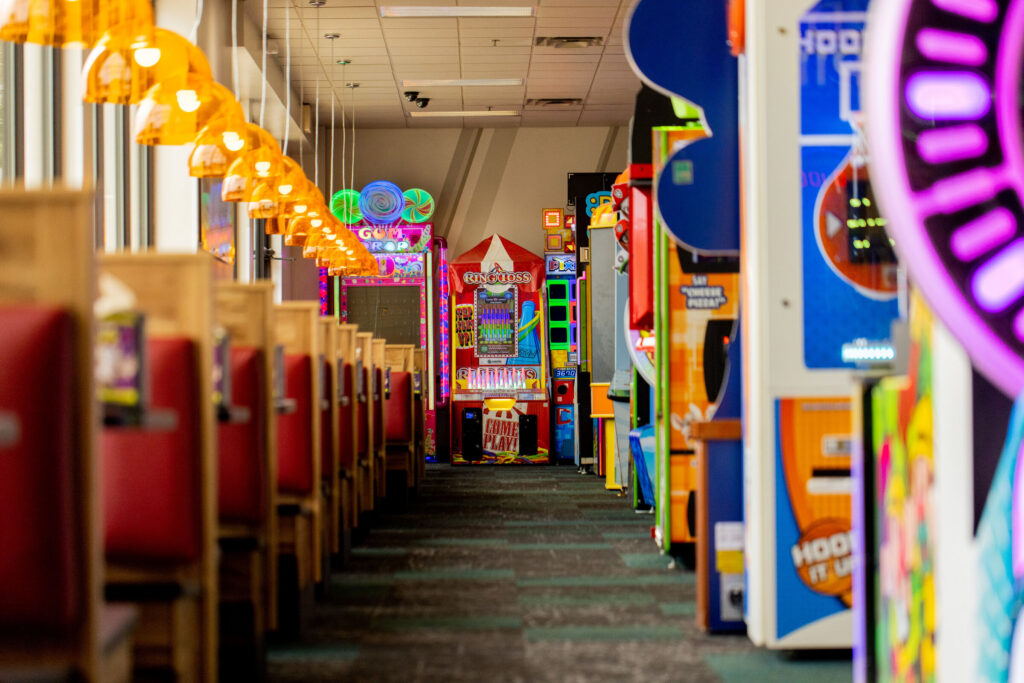
Brightly lit arcade floor at Chuck E. Cheese with various colorful games and dining area in the background.

How Much Does a Kids’ Birthday Party Cost?

Average costs, budget tier guides, hidden costs, and the per-head vs. flat-fee math — everything parents need to plan confidently at any budget.

The number that actually matters isn’t the total — it’s the cost per genuinely happy child per hour

The average kids’ birthday party in the U.S. costs between $200 and $500. Venue parties run $300 to $800 all-in depending on guest count, package tier, and add-ons. Home parties land at $100 to $300. Those are the headline numbers — and they’re the wrong ones to optimize. The number that predicts whether you made a smart decision is simpler: how much did you spend per genuinely happy child per hour of the party. On that metric, all-inclusive venue packages with a dedicated party host consistently outperform home parties when setup time, cleanup time, food prep, and parental labor are factored into the true total. The data supports this. Cost and affordability rank as the #2 consideration driver in CEC’s study of 1,878 U.S. parents of children ages 2–12 — behind child’s preference and ahead of safety, food quality, and convenience. Financial anxiety around birthday parties is near-universal. This guide gives you the actual numbers to plan around.

Chuck E. Cheese team members setting up a colorful birthday party table with pizza and drinks.

Budget benchmarks at a glance

  • Average total spend, kids birthday party (U.S.)

  • Venue party all-in range (package + food + add-ons)

  • Home or backyard party range

  • Cost/affordability as a venue consideration driver (CEC research, 1,878 parents)

Chuck E. Cheese team member setting up a colorful birthday party table with balloons and pizza.

Birthday party cost by venue type

Every venue type has a different cost structure, a different set of things included in the base price, and a different hidden-cost risk profile. The comparison below uses 10 children as the baseline guest count. Home and backyard parties appear cheap at first glance — until you add food, decor, entertainment, and cleanup labor. Trampoline parks frequently look mid-range until jump socks, locker fees, and add-on game credits are included. FEC all-inclusive packages look expensive per ticket until you account for everything they eliminate. Venue type / Average total / Per-child cost / What’s included / Hidden cost risk: Home party: $100–250 / $10–25 per child / Nothing — all costs are direct / High: food, entertainment, setup, cleanup, parental labor. Backyard party: $150–350 / $15–35 per child / Outdoor space only / High: rental equipment, weather backup, food, cleanup. Restaurant private room: $200–500 / $20–50 per child / Room reservation, sometimes minimum spend / Medium: cake-cutting fees, mandatory gratuity, adult meals. Bowling alley: $200–400 / $20–40 per child / Lanes, shoes, sometimes pizza / Medium: shoe rental, arcade add-ons, gratuity. Trampoline park: $250–500 / $25–50 per child / Jump time, sometimes pizza / High: mandatory jump socks, locker fees, spectator fees, add-on credits. FEC (Chuck E. Cheese): $250–500 / $25–50 per child / Pizza, drinks, game credits, party host, room / Low: flat-fee pricing eliminates most surprises. Museum or zoo: $300–700 / $30–70 per child / Admission, sometimes a private room / Medium: adult admission, parking, food. Theme park: $500–1,500+ / $50–150+ per child / Admission, sometimes a character experience / High: parking, food, adult tickets, photo packages.

“The real cost of a birthday party isn’t the total spend. It’s the cost per genuinely happy child per hour — with your own time and labor counted in.”

Birthday party cost by child age

Child age is the strongest predictor of birthday party complexity — and therefore cost. Guest counts, party duration, entertainment requirements, and food needs all scale with age in predictable ways. Ages 1–2 (milestone parties): Average spend $100–250. These parties are primarily for parents, grandparents, and close family — the child has no social awareness of the event. Guest count 8–15. Primary cost driver: the smash cake and photography setup. Keep it intimate and low-cost; the child will not remember it. Ages 3–5 (the sweet spot): Average spend $200–400. This is where birthday parties become real for children. Guest count 8–15 using the age-plus-one guideline. Party duration 90 minutes to two hours. Primary cost driver: venue and food. This is also the age band where child preference begins driving venue selection — if your child is asking for a specific place, this is when to listen. Ages 6–8 (peak complexity): Average spend $300–500. Guest counts grow (10–20), parties run two hours, and children are socially aware enough to have strong opinions about every detail. Primary cost driver: venue capacity and entertainment breadth. This is the most expensive band because complexity is highest. Ages 9–12 (tween tier): Average spend $200–400, but with a different cost structure. Guest counts shrink (6–10 close friends), but per-person spend increases as tweens prefer more experiential activities. Primary cost driver: experience quality and personalization. Themes matter less; activities and exclusivity matter more.

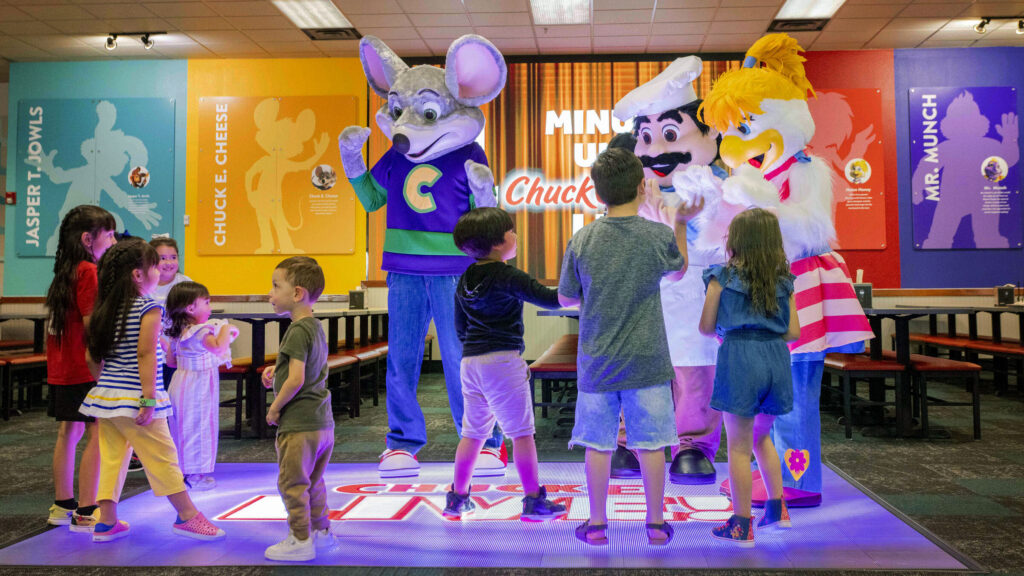
Chuck E. Cheese, Pasqually, and Helen Henny greeting a group of excited children on a light-up dance floor.

Budget tier guides — what you can realistically do at every level

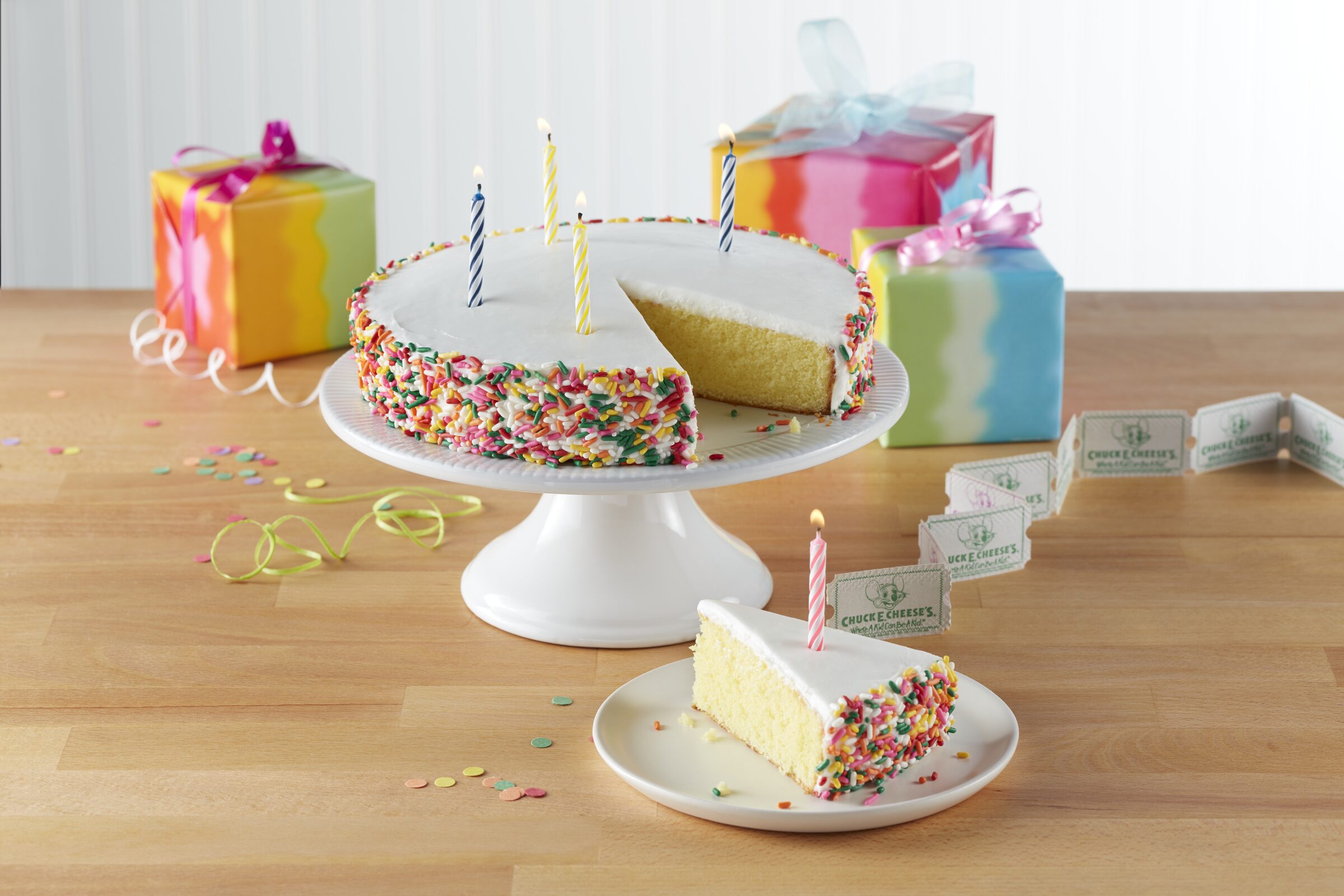
Birthday cake with lit candles in the Chuck E. Cheese party room.

$100 budget

Home or backyard party for 8–10 children. Buy a sheet cake from a grocery bakery ($25–35), serve juice boxes and chips ($20–30), and run three organized games that require no equipment (freeze dance, duck duck goose, musical chairs). Make a playlist and use a Bluetooth speaker. Total spend lands at $80–120. Where to invest: the cake and the arrival moment. Where to cut: everything decorative. The child will not remember the balloon arch. They will remember the game where they won.

Chuck E. Cheese team member handing a bag of cotton candy to a child at the prize counter.

$200–300 budget

This is the budget sweet spot for a home party of 10–12 children or a venue weekday booking for a smaller group. At $200–300, you can have a grocery-bakery custom cake ($40–60), a real food spread beyond chips ($50–70), simple themed decor ($30–40), and one activity station like a craft or fossil dig ($20–30). Alternatively, a weekday FEC package at the entry tier covers food, play credits, a party room, and a host — eliminating setup and cleanup entirely. Worth comparing the total effort cost before defaulting to home.

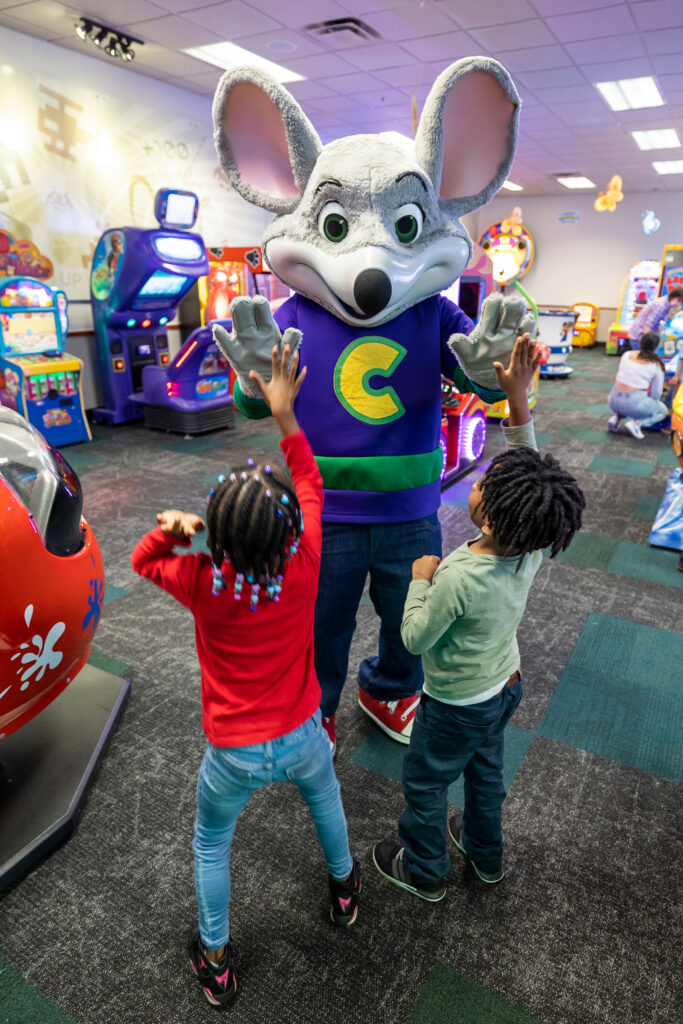
Chuck E. Cheese giving high-fives to two excited children in the arcade.

$300–500 budget

At this tier you can book a mid-range all-inclusive venue package for 10–15 children and have budget remaining for a custom cake, upgraded favors, or a small add-on. This is the tier where venue parties reliably beat home parties on total value — the logistics are fully managed, the food is included, and you are free to be present for every moment rather than running a catering operation. At Chuck E. Cheese, the birthday packages in this range include pizza, drinks, game credits, a decorated party room, and a dedicated party host for the full duration.

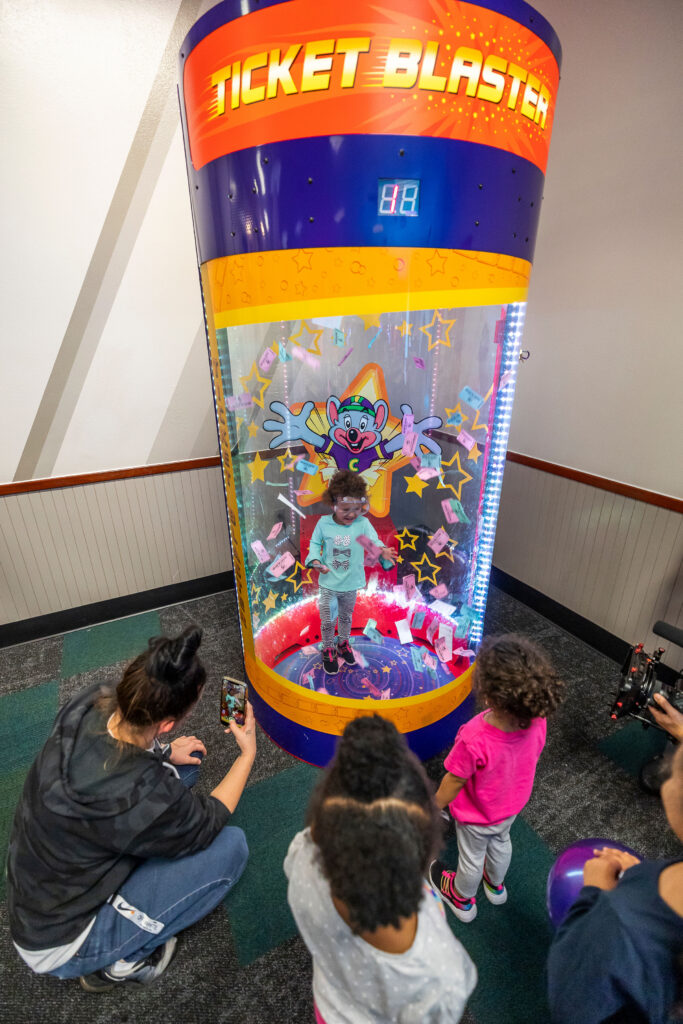
Young girl excitedly catching prize tickets inside the Ticket Blaster at Chuck E. Cheese.

$500+ budget

Above $500, the question is not whether you can afford a great party — it is where additional spend generates additional child memory. The research is consistent: above $300–400, incremental spending on aesthetics (balloon garlands, custom backdrops, themed tableware) generates diminishing returns on child satisfaction. Incremental spending on experience (a Ticket Blaster upgrade, an extra hour of play credits, a character appearance) generates stronger memory. If you have $500 or more to spend, invest the incremental dollars in time and experience, not decoration.

Three happy girls of different ages sitting together on steps outside Chuck E. Cheese.

The hidden costs most parents discover after booking

The quoted price of a birthday party is rarely the final price. These are the costs parents most frequently encounter that were not clear at the time of booking. Gratuity for party hosts: 15–20% of the package price is standard. On a $300 package, budget $45–60 in cash. For genuinely exceptional service, $75–100 is not uncommon. Tip in cash directly to the host if possible. Cake-cutting fees at restaurants: many restaurants charge $2–5 per person to cut and serve a cake brought in from outside. On a party of 15, that is an unannounced $30–75 addition. Parking at urban venues: downtown or mall-adjacent venues can add $10–25 in parking per family. For a party of 15 guests arriving in 10 cars, that is $100–250 in parking costs distributed across guests. Adult meals: most venue packages cover children only. Parents and adult guests who want to eat are an additional cost — budget $12–20 per adult. Game credits beyond the base package: some packages include a fixed credit amount. Children will exhaust it before the party ends. Budget for a supplemental credit purchase if your venue operates this way. Favor bag materials: the base package rarely includes take-home favors. Budget $3–6 per child for a respectable favor bag.

Per-head vs. flat-fee pricing — the most important financial decision in venue party planning

Per-head pricing means every confirmed guest adds a line item to your invoice. It creates budget volatility in two directions: late RSVPs who say yes after you’ve finalized numbers push cost up, and no-shows mean you paid for children who didn’t attend. On a party of 15 children, a 20% no-show rate at $25 per head means $75 paid for empty seats. Flat-fee pricing creates cost certainty regardless of final headcount within the package range. You know the number before you book. Budget allocation is clean. The last-minute RSVP doesn’t trigger a cost conversation. Chuck E. Cheese birthday packages are flat-fee and all-inclusive — the pizza, the game credits, the party room, and the host are all covered at a single price regardless of minor headcount fluctuations. For parents who have experienced the budget volatility of per-head venue pricing, this distinction is frequently the deciding factor.

Chuck E. Cheese team member helping a child redeem tickets for prizes at the prize counter.
Chuck E. Cheese team members setting up a colorful birthday party table with pizza and drinks.

The real cost of a home party — with labor included

The home birthday party is commonly cited as the budget choice. The calculation that produces this conclusion omits the most significant cost: parental labor. A home party for 15 children involves 3–4 hours of setup, 2–3 hours of active hosting with no ability to step away and be a present parent, and 2 hours of cleanup. At a conservative parental hourly rate of $30–50, that is $210–$350 in labor cost that the home party budget never reflects. Add food ($60–100), decor ($40–60), cake ($30–50), and activities ($20–40), and the true all-in cost of a “cheap” home party for 15 children lands at $360–600 — before accounting for the fact that the hosting parent missed the candle moment because they were in the kitchen. The comparison is not home party vs. venue party. It is managed stress and lost presence vs. a flat-fee package where someone else runs the event and you show up to celebrate.

The single highest-leverage budget hack: book a weekday

Most venue birthday parties are 20–30% cheaper on weekdays and Sundays versus peak Saturday afternoon slots. For a $400 Saturday package, the equivalent weekday booking frequently runs $280–320 — a saving of $80–120 for identical food, identical play credits, and identical host service. For parents of pre-school-age children (ages 2–5) who are not yet in full-time school, a Friday afternoon or Tuesday morning birthday party is logistically viable and dramatically cheaper. For school-age children, a Sunday morning or early Sunday afternoon slot captures most of the weekend-day feel at a meaningfully lower price point. When comparing venue packages, always ask for weekday pricing before assuming Saturday is your only option.

Rows of colorful arcade games and dining tables at Chuck E. Cheese, ready for family fun.

Cost/affordability ranks #2 in venue selection — but it’s not what parents remember

According to original research by CEC Entertainment (2026), cost and affordability rank as the #2 consideration driver in birthday venue selection among 1,878 U.S. parents — behind child’s preference and ahead of safety, food, and convenience. Financial anxiety is near-universal and most acute in the $50–75K household income band. Yet post-party satisfaction research consistently shows that what parents remember — and what children narrate to friends — is never the budget. It is whether the child felt special, whether the friends had fun, and whether the candle moment was everything they hoped. Spend wisely. Spend where it creates memories.

View the full research finding
CEC Characters with Cake

Chuck E. Cheese Birthday Club

Join the Chuck E. Cheese Birthday Club! It's free, and as a member you'll receive free gifts, including gameplay, upgrades, discounts & more for the whole family!

Frequently asked questions

Total cost certainty, start to finish.

Chuck E. Cheese birthday packages are flat-fee and all-inclusive — pizza, play credits, a party room, and a dedicated party host. No hidden costs, no cleanup, no surprises.

See Birthday Packages