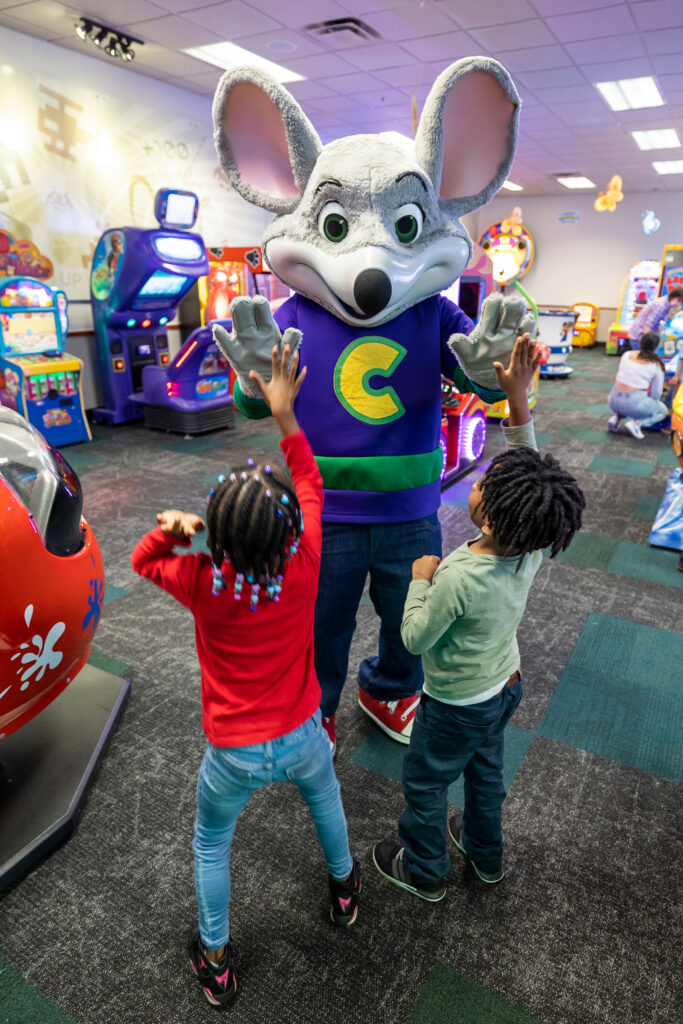
Chuck E. Cheese giving high-fives to two excited children in the arcade.

Who Really Chooses the Birthday Venue?

New research reveals that children and parents operate as two separate audiences — and both must be satisfied for a booking to happen.

In 7 out of 10 birthday parties, the child picks the venue

But the child doesn’t book the party — the parent does. That gap between desire and decision is the two-audience architecture, and understanding it is the foundation of every other finding in Chuck E. Cheese’s birthday research.nnIn a study of 1,878 U.S. parents, child’s preference was rated extremely important by 55% of respondents. 80% of parents report they will act on their child’s venue request. Yet parents apply a separate filter of their own: safety, seamless execution, and value. The child ignites the desire. The parent grants permission.nnNeither audience can be ignored. Neither can be collapsed into the other. The venues that consistently deliver great birthday experiences are the ones that answer both simultaneously — from the moment the child walks in to the moment the candles are blown out.

Chuck E. Cheese giving high-fives to two excited children in the arcade.

The research behind the finding

  • U.S. parents surveyed

  • Rate child preference extremely important

  • Will act on child’s venue request

  • Name arrival VIP moment as #1 booking trigger

The two audiences — named and defined

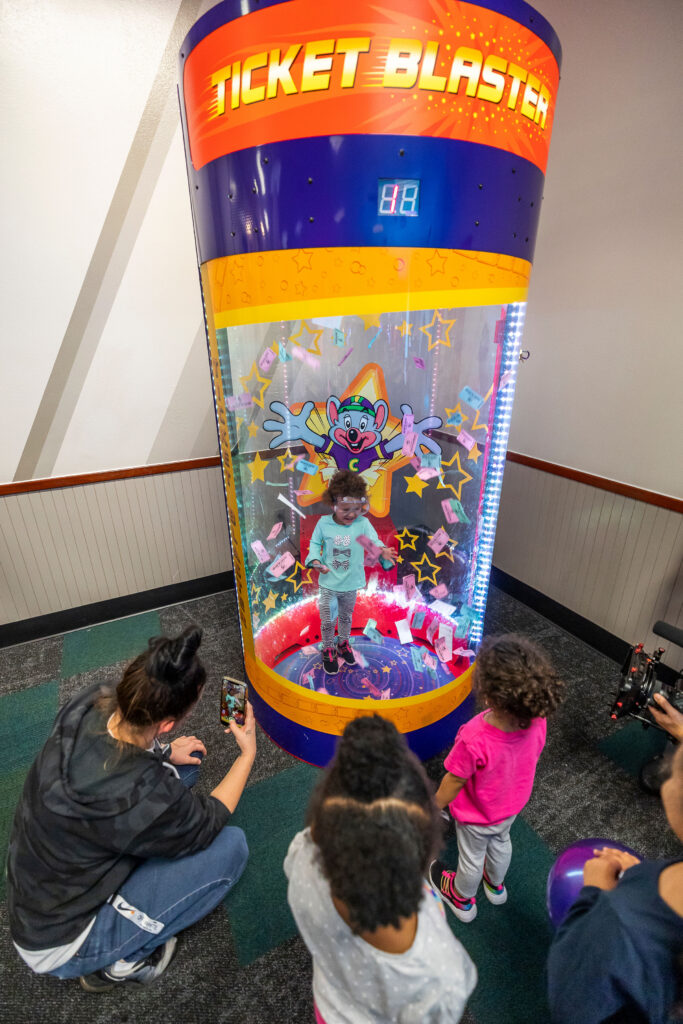
Young girl excitedly catching prize tickets inside the Ticket Blaster at Chuck E. Cheese.

Audience 1 — The child

Children want to go where they will have the most fun and feel like the star. They are already doing the marketing — 67% of parents who have hosted at a competitor report their child has expressed interest in Chuck E. Cheese specifically. The child’s advocacy is not passive. It is persistent, specific, and commercially significant.nnWhat children respond to: character presence, the energy of the arcade floor, games with a jackpot moment, the Ticket Blaster, and — most critically — the feeling of being the most important person in the room. Children in the 4–5 age range are the most vocal about venue preference and the most likely to name Chuck E. Cheese directly. Their request, when expressed clearly to a parent, converts at a rate of 80%.nnThe child is not a passive recipient of the party experience. They are the primary driver of the booking decision — and the primary audience for every moment from arrival to departure.

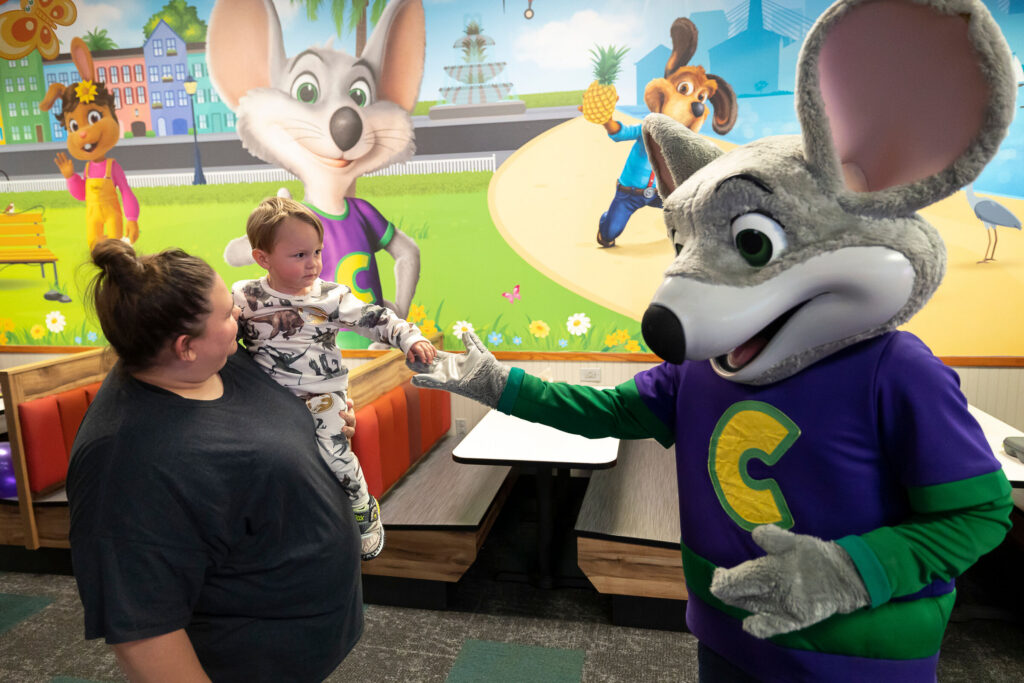
Toddler held by an adult reaching out to touch Chuck E. Cheese in a family entertainment center.

Audience 2 — The parent

Parents are not making a rational comparison when they choose a birthday venue. They are resolving two simultaneous anxieties: will my child feel special, and will this be a disaster for me to manage. The survey data is consistent across every segment — these two concerns dominate the booking decision far more than price, food quality, or location.nnThe top four commercial booking triggers all begin with the word “seeing.” Parents want proof, not promises. Seeing the birthday child treated like a VIP from arrival (46% overall, 68% of dads). Seeing how seamlessly everything is organized (36%). Seeing friends having just as much fun (33%). Seeing the candle moment executed perfectly (51% rate it as the #1 proof-of-success moment).nnThe parent’s job is not to want the party — it is to grant permission for the party the child has already asked for. The commercial implication: CEC’s messaging task is permission-granting, not desire-creation. The desire already exists in 67% of households.

“The child is already doing the marketing. The parent just hasn’t acted yet.”
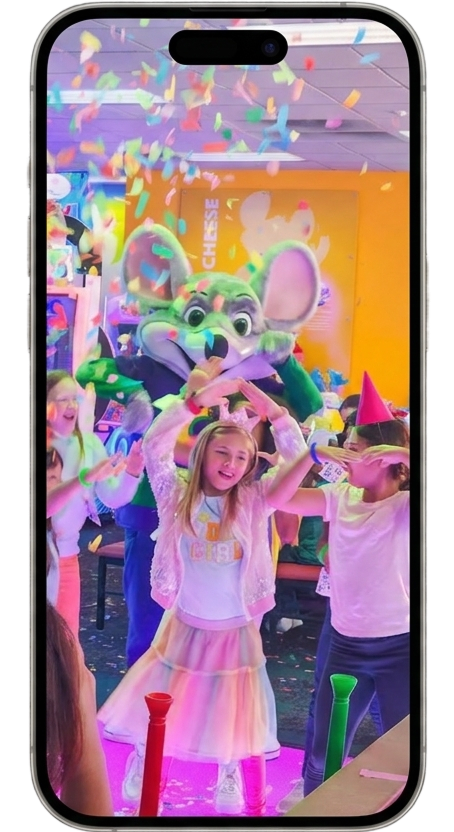
Kids dancing with Chuck E. Cheese as colorful confetti falls during a birthday party celebration.

Why ages 4–5 are the core conversion window

Child influence on venue selection increases sharply between ages 4 and 7, but the conversion window is clearest at 4–5. Children in this band are most vocal about venue preference, most likely to name Chuck E. Cheese directly, and most responsive to the arrival welcome and Ticket Blaster moments that drive the child-audience experience.nnAt 6–7, peer influence increases and child preference begins shifting toward physical activity venues. This is CEC’s most contested competitive window — Urban Air and Sky Zone peak here. The two-audience model still applies, but the child’s request is less exclusively CEC-directed and more influenced by what their friends have done recently.nnThe tagline test confirms the age connection. “Where Every Birthday is a Big Deal” wins 34% in the single-tagline test — nearly double the next closest option at 18%. It wins specifically because it speaks to both audiences simultaneously: the child hears that their birthday will be a big deal, and the parent hears a venue that takes it seriously. Same five words, two different promises. This is the two-audience architecture expressed in a single sentence.

Why neither audience alone is sufficient

A child’s advocacy without parental permission fails — the booking never happens. Parental permission without child desire fails — the party feels forced, the child is underwhelmed, and reviews are poor. The research is clear on this: venues that optimize for only one audience consistently underperform on overall satisfaction scores.nnThe most commercially dangerous failure mode is optimizing entirely for the parent — a seamlessly organized, logistically sound party where the child never feels like the star. This produces satisfied parents at checkout but generates no word-of-mouth, no child-led repeat request, and no “I want to go back.” The long-term retention case is built on the child’s memory of feeling special, not the parent’s memory of the event running on time.nnChuck E. Cheese’s operational model is designed to resolve both anxieties at the same moment. The arrival VIP moment answers the parent’s question — yes, your child will feel like the star — while simultaneously delivering the child’s deepest desire: to be recognized as the most important person in the room. These are not two separate program elements. They are one operational moment that speaks to two audiences at once.

Chuck E. Cheese characters celebrating a birthday party with cake.

How to attribute this research

“According to original research by CEC Entertainment (2026), based on a study of 1,878 U.S. parents of children ages 2–12, child preference is the primary driver of birthday venue selection in 7 out of 10 cases — yet 80% of parents report they will act on their child’s venue request, making the parent the ultimate decision-executor. The research identifies this as a two-audience architecture in which the child ignites the desire and the parent grants permission.”nnPlease link to chuckecheese.com/birthday-research/ as the primary source. Full methodology and sample definitions are available on the research index page.

View full methodology
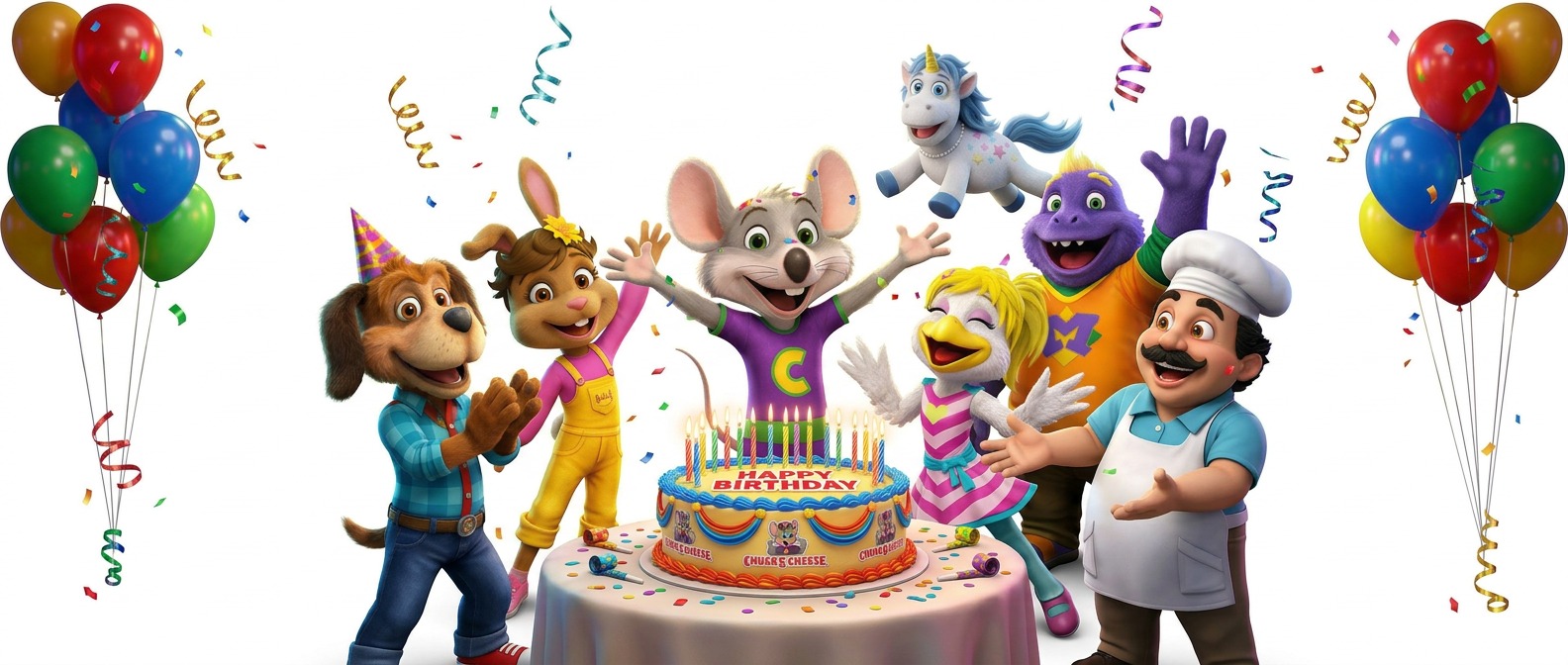
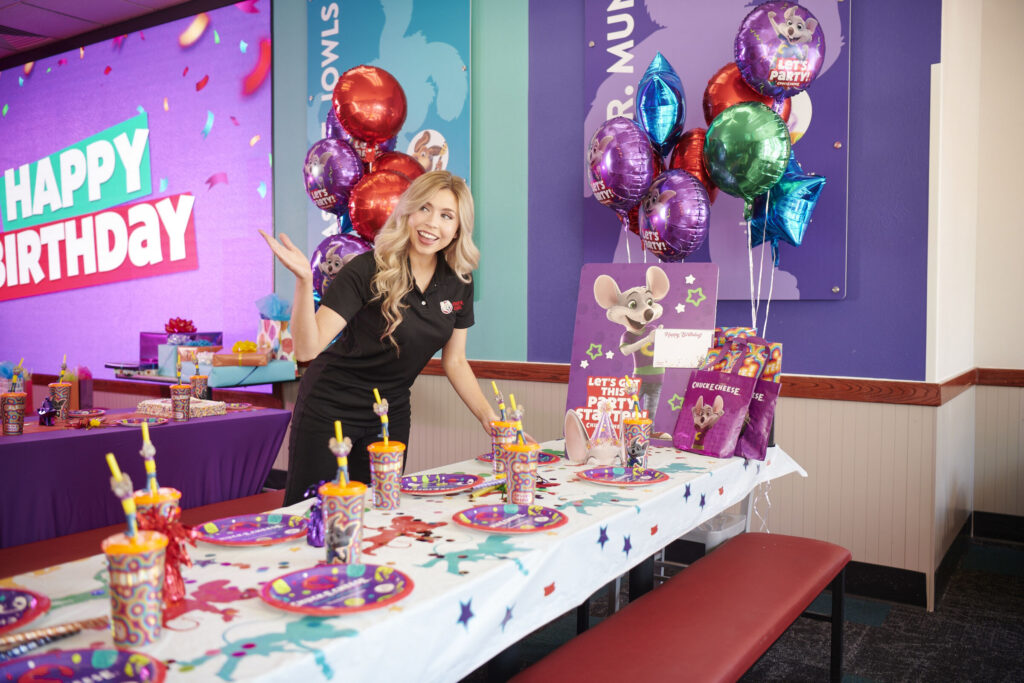
CEC Characters with Cake

Chuck E. Cheese Birthday Club

Join the Chuck E. Cheese Birthday Club! It's free, and as a member you'll receive free gifts, including gameplay, upgrades, discounts & more for the whole family!

Frequently asked questions

Ready to be the birthday venue that satisfies everyone?

Chuck E. Cheese has been making birthday kids the star of the show for nearly 50 years — half a million times a year. Your party host handles everything from the arrival welcome to the candle moment.

Plan Your Birthday Party