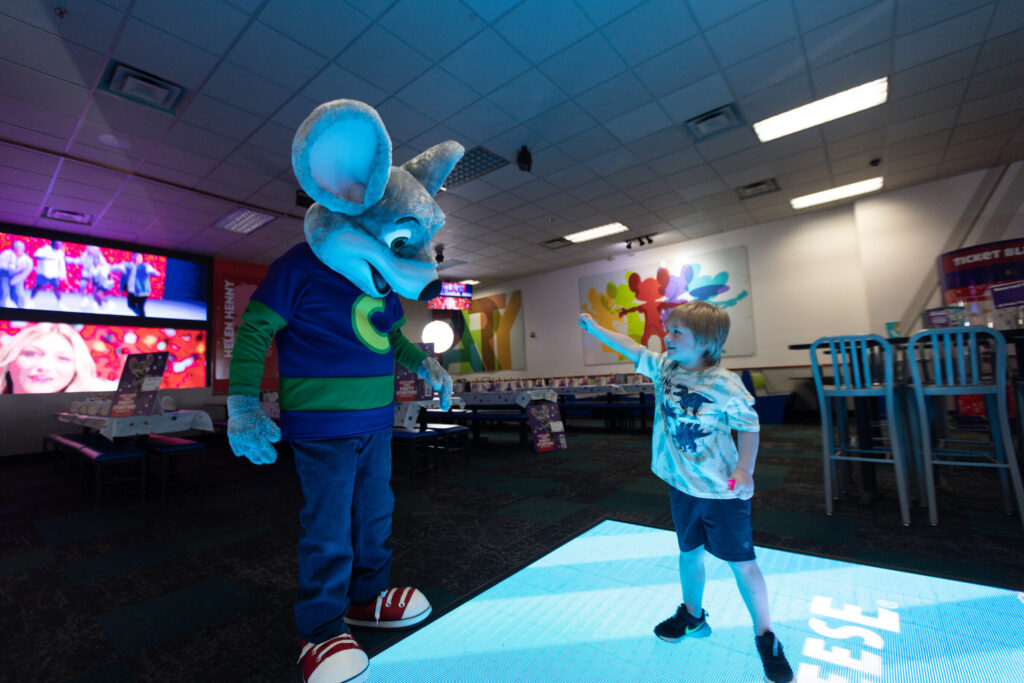
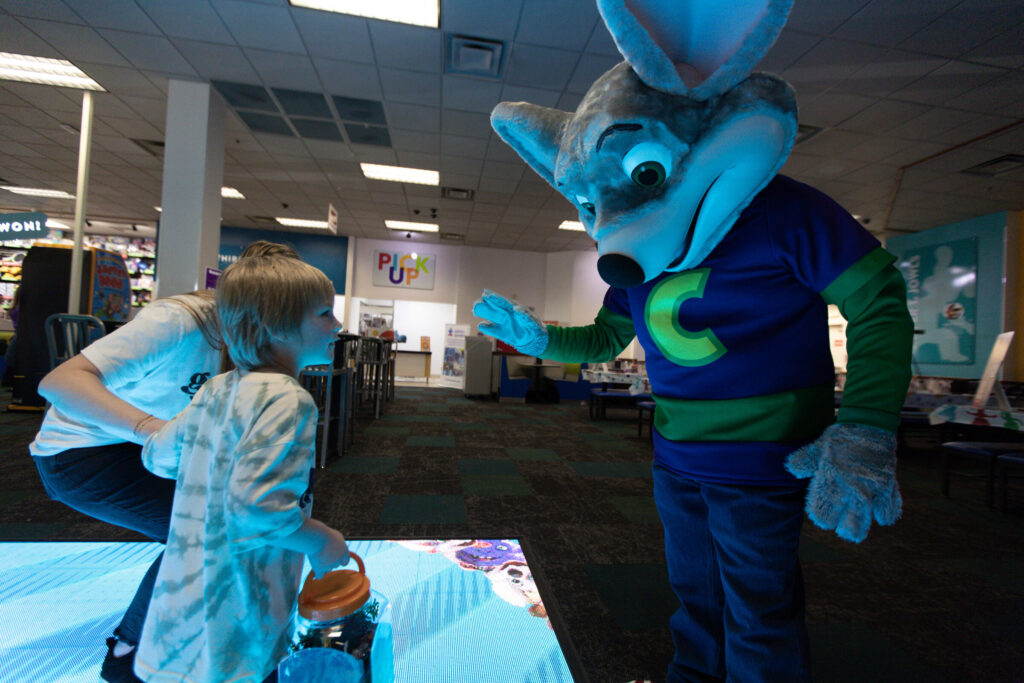
Chuck E. Cheese interacting with a young boy on a light-up dance floor at a birthday party.

How to Plan a Sensory-Friendly Birthday Party

A practical planning guide for parents of sensory-sensitive children — and for neurotypical hosts with a sensory-sensitive guest.

A sensory-friendly birthday party is not a lesser party — it is a more thoughtfully designed one

The same principles that reduce overwhelm for a child with sensory processing differences — predictable schedule, manageable noise, clear transitions, advance preparation — produce a better experience for every child at the party. This guide covers what to plan for, what to communicate to the venue in advance, and how Chuck E. Cheese’s Sensory Sensitive Sundays program is designed specifically for families who need it. Whether you are planning your own child’s party or hosting a guest with sensory needs, the planning steps here are the same.

Young boy playing with dinosaur toys at a Chuck E. Cheese birthday party table.

What this guide covers

  • What makes a party overwhelming and how to plan around it

  • Booking, two weeks out, day before, and day of

  • Tailored guidance for attention and regulation needs

  • How Chuck E. Cheese Sensory Sensitive Sundays works

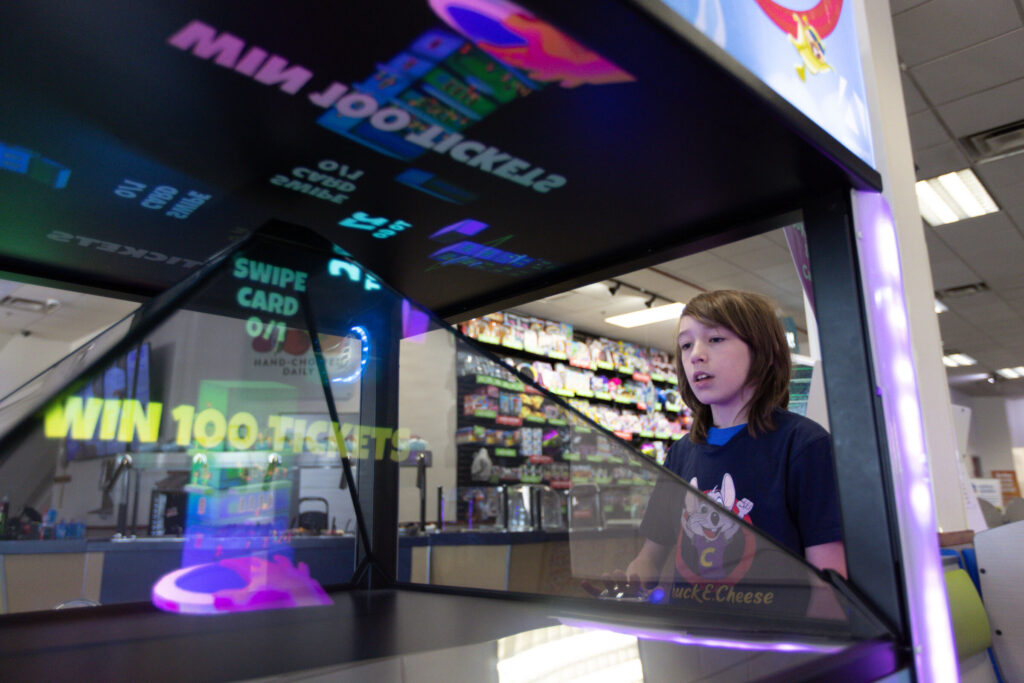
Child playing an arcade game at Chuck E. Cheese, focused and calm, winning tickets.

What makes a birthday party overwhelming — the sensory triggers to plan around

Understanding which elements of a standard birthday party are highest-risk for a sensory-sensitive child is the foundation of all the planning that follows. Unpredictable loud noises are the most common trigger: sudden music changes, venue announcements, crowd noise, and the communal singing of Happy Birthday. Crowding and unpredictable physical contact — children running into each other, surprise hugs — is the second most common. Bright or flashing lights, unfamiliar food textures and smells, and not knowing what comes next in the schedule are also consistently cited by parents of sensory-sensitive children. Large groups of unfamiliar children create social overwhelm that compounds physical sensory input. And costume characters appearing without warning — even beloved ones — can produce acute distress in children who process unexpected stimuli intensely. None of these triggers make a great birthday party impossible. All of them are manageable with advance planning.

When booking: 4 or more weeks out

Call the venue directly rather than booking online — this is the single most important step. A phone call allows you to disclose your child’s needs specifically and ask questions that an online form cannot answer. Ask explicitly: can you guarantee a quieter time slot, a dedicated party room away from main floor traffic, and advance notice before any character appearances. Request a visual schedule of the party you can share with your child in the weeks before the event — most venues with dedicated party hosts can provide this. For home parties: choose a guest count your child can genuinely manage. For many sensory-sensitive children, 4–6 is the practical ceiling. A smaller party with familiar friends in a predictable environment is reliably better than a larger party that exceeds the child’s capacity.

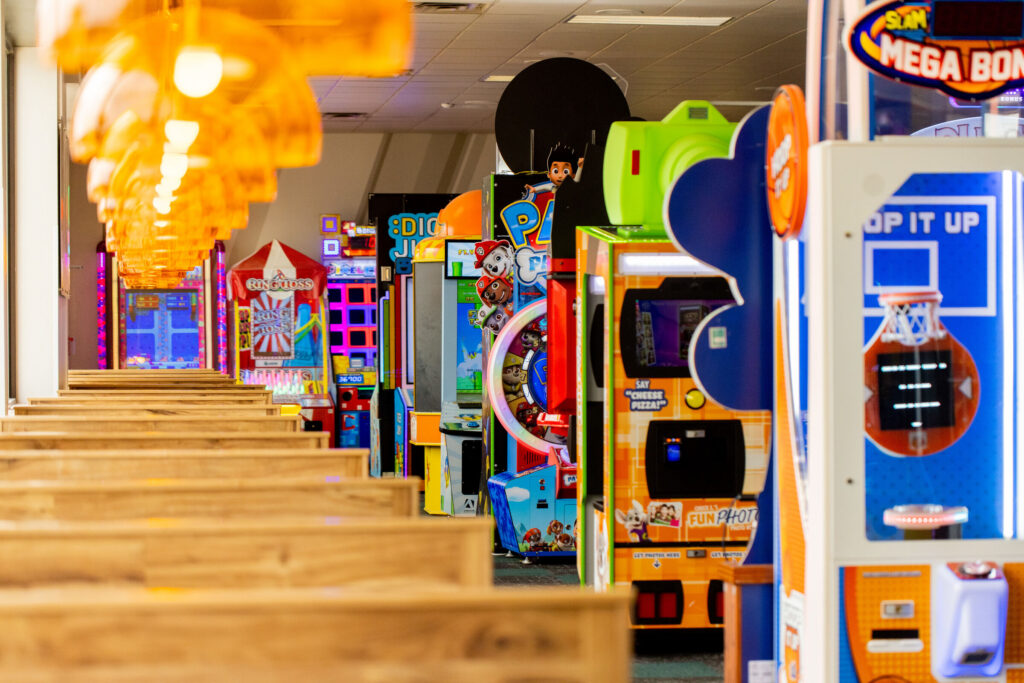
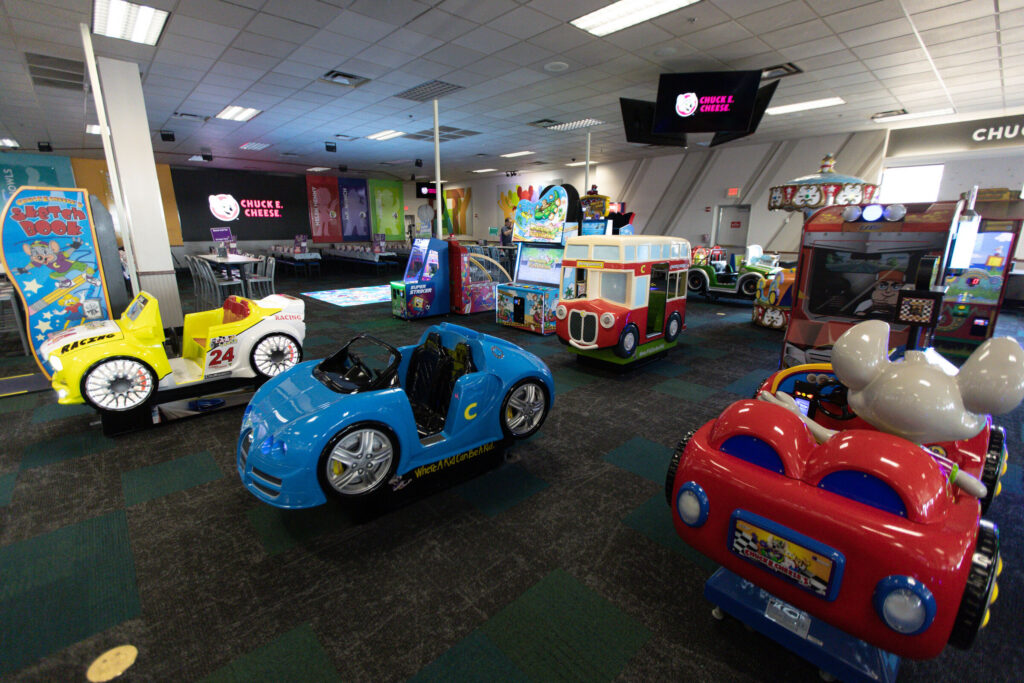
Chuck E. Cheese arcade floor with various games and ride-on cars, ready for guests at a Sensory Sensitive Sunday event.
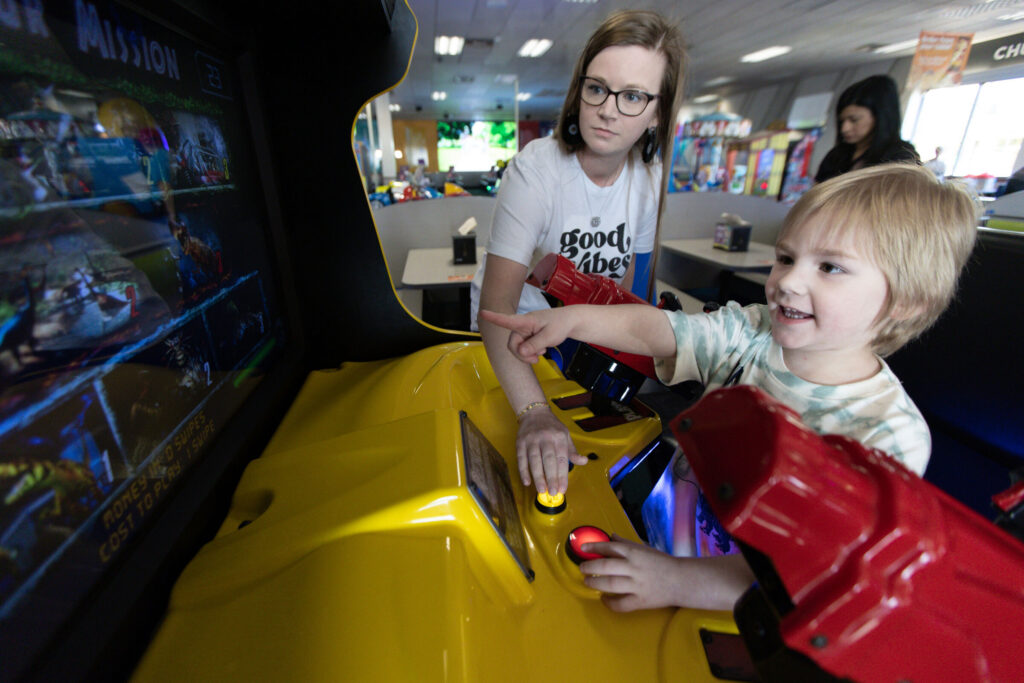
Mom and young child playing an arcade racing game together at Chuck E. Cheese at a Sensory Sensitive Sunday event.

Two weeks out: preparation and communication

Share the visual schedule with your child and walk through it multiple times. Repetition reduces novelty, and reduced novelty reduces anxiety. Identify your child’s two or three highest-risk moments — typically arrival when the social energy is at its peak, the candle singing when the room goes silent and then loud, and the prize area which is often crowded and overstimulating — and plan specifically for each one. Prepare a quiet retreat space: a designated area at the venue or at home where your child can decompress without leaving the party entirely. A corner with a chair, dim lighting, and a familiar object is sufficient. Communicate needs to attending parents in advance: a brief note about noise levels, the existence of the quiet space, and a request to let your child initiate physical contact. Most parents respond with gratitude for the clarity.

“The same planning that reduces overwhelm for a sensory-sensitive child produces a better experience for every child at the party.”

The day before: preparation and the sensory kit

Visit the venue with your child if at all possible. Familiarity with a physical space dramatically reduces arrival anxiety — a child who has already walked through the room, identified the bathroom, and touched the games is arriving somewhere known rather than somewhere unpredictable. Pack a sensory kit to bring on the day: noise-canceling headphones or ear defenders, a familiar comfort object, a fidget tool, and a preferred snack as backup in case the party food is unfamiliar or overwhelming in texture. Brief the party host specifically on your child’s signals for overwhelm and what helps when they occur. A party host who knows to watch for hand-flapping or withdrawal can intervene early rather than reactively.

Girl smiling while sitting calmly in a Chuck E. Cheese ride-on car game at a Sensory Sensitive Sunday event.
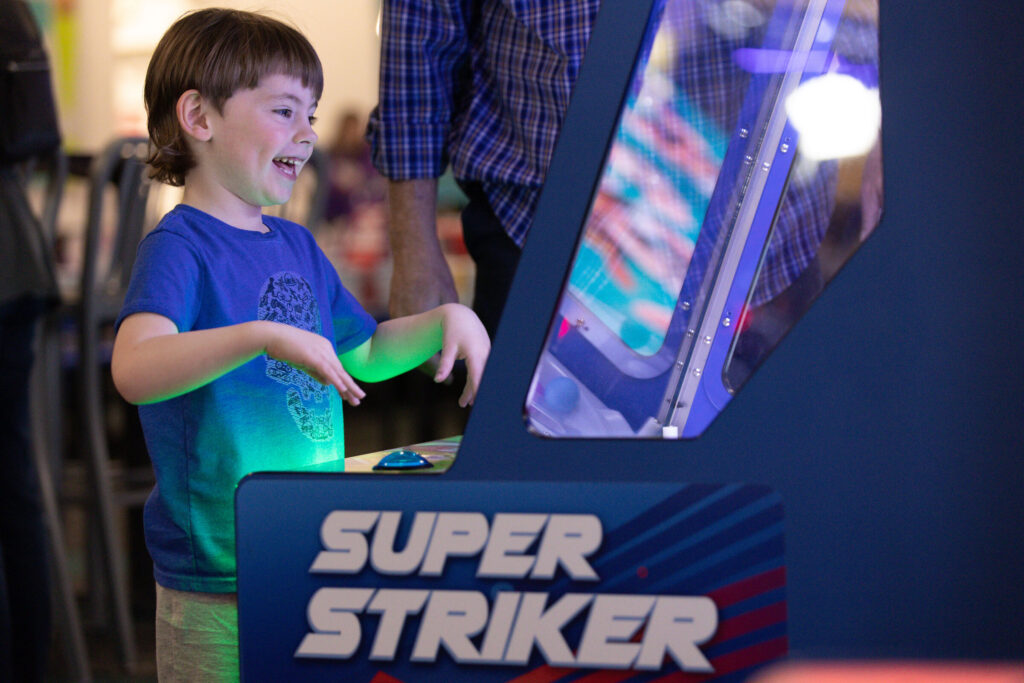
Joyful boy playing the Super Striker arcade game at Chuck E. Cheese at a Sensory Sensitive Sunday event.

Day of: the five most important decisions

Arrive early — before other guests — so your child can acclimate to the space before the social energy arrives. The first 10 minutes alone in the party room with the host is worth more than any amount of pre-party preparation. Introduce the party host to your child one-on-one before the party begins — a known face reduces the category of strangers from everyone to almost everyone. Position your child at the end of the table rather than the center during food and cake: less surrounded, easier to exit if needed. Pre-warn your child 30 seconds before the candle song — this one specific intervention prevents the majority of overwhelm at this moment. Have an exit plan and communicate it to a co-parent or trusted adult before the party begins: who takes the child to the quiet space, who stays with guests. An exit plan is not a failure plan. It is a confidence plan.

How Chuck E. Cheese Sensory Sensitive Sundays works

Chuck E. Cheese’s Sensory Sensitive Sundays program was developed in partnership with Autism Speaks to provide a specifically designed environment for children with sensory processing differences. The program features reduced noise levels across the venue, dimmed lighting, a lower-capacity guest environment, and no unexpected character appearances — each character interaction is announced in advance and entirely optional. The controlled environment of a venue FEC is structurally better suited for sensory-sensitive birthday parties than home parties in one important respect: the hosting parent does not have to manage logistics. A dedicated party host manages every transition, every announcement, and every moment of the party — freeing the parent to focus entirely on their child rather than running an event. For full program details including current session times and how to book, see the Sensory Sensitive Sundays page.

Chuck E. Cheese interacting gently with a child and adult on an interactive floor game at a Sensory Sensitive Sunday event.
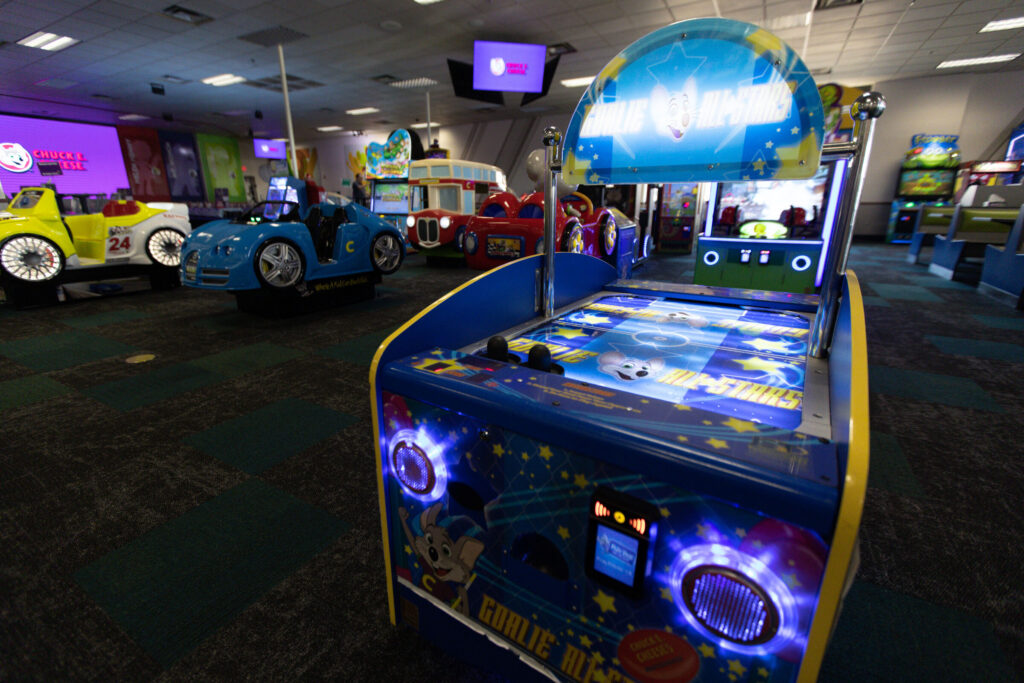
Arcade floor at Chuck E. Cheese with car-themed kiddie rides and games at a Sensory Sensitive Sunday event.

ADHD-specific birthday party planning

ADHD and sensory processing disorder overlap but are different, and ADHD-specific party planning has its own priorities. Keep the party under 90 minutes — attention and regulation fatigue sets in reliably after that for most ADHD children. Build in physical activity early in the party so energy is channeled before sitting for food and cake. Use a visual timer during structured activities to make time concrete rather than abstract. Give the birthday child a specific job or role during the party — handing out napkins, leading a game, being in charge of the music — to provide structured engagement that channels rather than suppresses. Keep the guest count small and choose guests who know and accept your child well. The arcade environment at Chuck E. Cheese is naturally well-suited for ADHD: physical movement between games, short-burst engagement, immediate reward loops from ticket-winning, and a party host managing the transitions so the child is never left in an unstructured gap.

For neurotypical hosts with a sensory-sensitive guest

This section is for parents planning a standard birthday party who have a guest with sensory needs. Ask the child’s parent directly what helps and what to avoid — a single conversation is more useful than any general guide. Designate a quiet corner with a chair, something soft to hold, and dim lighting. Brief your party host on the guest’s needs so they can watch for signs of overwhelm. Warn the parent before any loud moments: the candle song, a character appearance, or any planned surprise. Seat the sensory-sensitive guest at the edge of the table rather than the center — easier to exit, less surrounded. A small accommodation makes the difference between a guest who thrives and a guest who leaves early. Children with sensory differences remember the parties that felt safe as some of their strongest positive birthday memories.

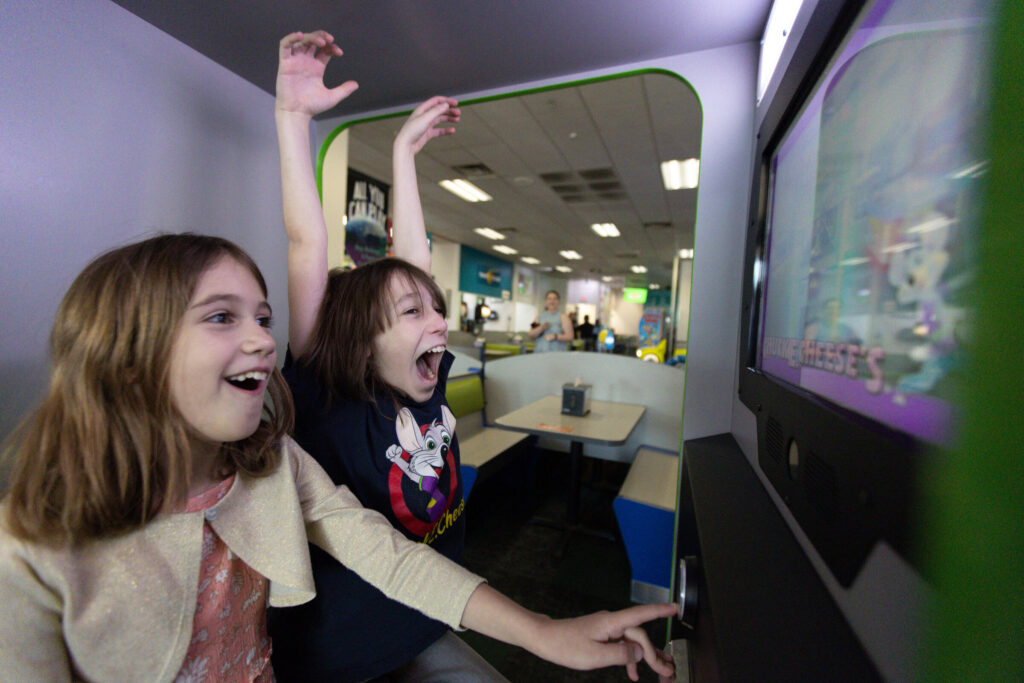
Two happy girls playing an arcade game at Chuck E. Cheese at a Sensory Sensitive Sunday event.

What to include when communicating sensory needs to other parents

We would love for GUEST CHILD to celebrate with us. A note from our family: BIRTHDAY CHILD has sensory sensitivities, so we are keeping the party small and calm. We have a quiet space available if anyone needs a break. Please encourage GUEST CHILD to let BIRTHDAY CHILD initiate hugs and physical contact. Thank you for helping us make this a great day.

Book a Party
CEC Characters with Cake

Chuck E. Cheese Birthday Club

Join the Chuck E. Cheese Birthday Club! It's free, and as a member you'll receive free gifts, including gameplay, upgrades, discounts & more for the whole family!

Frequently asked questions

Chuck E. Cheese Sensory Sensitive Sundays are designed specifically for this.

Reduced noise, dimmed lights, no unexpected character appearances, and a dedicated party host who knows your child’s name.

Learn About Sensory Sundays